10+ Years ExperienceInsured
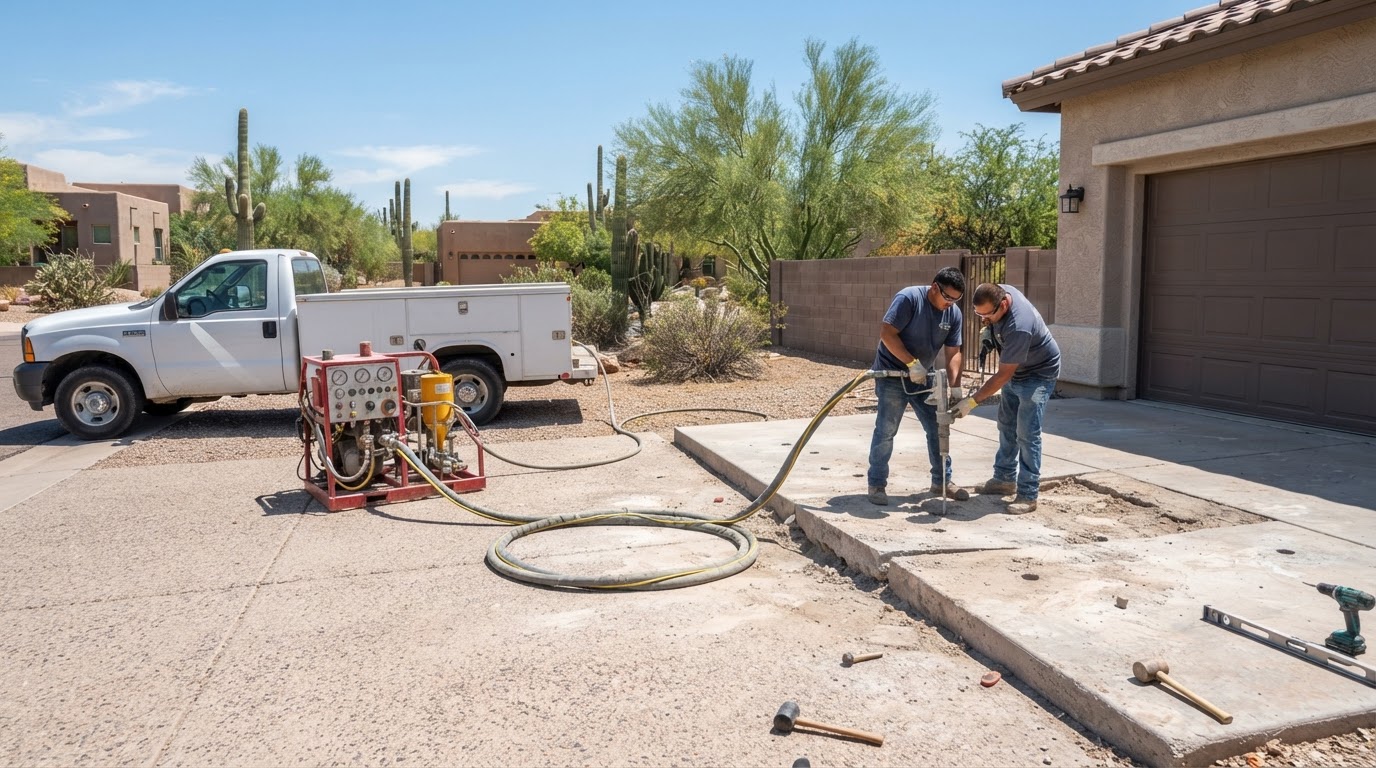
Professional concrete slab-leveling equipment set up beside a settled concrete slab

10+ Years Experience · Insured

Concrete Leveling Methods in Gilbert, AZ

Not every settled slab should be treated with the same method. We compare polyjacking, mudjacking, slab lifting, and void stabilization — then choose the one that fits your slab, void, access, and budget.

Request an Estimate

Tell us about your project. We'll follow up with clear pricing and next steps.

The customer/project address for the work.


Consent is optional. You may request an estimate without opting in to text messages.

Concrete leveling is not a single material applied to every slab. Polyjacking uses expanding polyurethane foam through small injection holes; mudjacking pumps a cementitious slurry through larger access holes; void filling and slab stabilization restore support beneath a slab without necessarily raising it. Each method has different material characteristics, injection requirements, and project fit — and the right choice depends on slab condition, lift requirements, void size, access, surrounding surfaces, load, desired control, and project economics. Gilbert Concrete Leveling has 10+ years of experience and is insured, and the goal is to choose a practical repair method for the actual slab rather than sell one material for every project.

Void filling may be required even when the objective is support rather than significant lift, because a slab can lose the soil beneath it before the surface drops noticeably. And replacement remains the appropriate path when the slab condition makes lifting a poor choice — when the concrete is badly deteriorated, severely fragmented, or no longer structurally sound. This page compares the methods so you understand the options before an evaluation. See our concrete leveling overview or FAQ for broader context.

Why Gilbert Property Owners Need the Right Leveling Method

Choosing the wrong method for a slab wastes money and can fail to address the real problem. The right method comes from inspecting the slab first.

  • 10+ Years of Experience

    A decade of selecting between polyurethane foam, mudjacking, and void filling based on what each slab and void actually require.

  • Insured

    Gilbert Concrete Leveling is insured for the concrete leveling work we perform on your property.

  • More Than One Legitimate Repair Method

    We are not locked to a single material. Polyjacking, mudjacking, and stabilization each have a place, and we recommend the one that fits the conditions.

  • Condition-Based Recommendations

    The method is chosen after inspecting slab condition, settlement pattern, void size, and access — not before.

  • Understanding Voids and Support vs Elevation

    We distinguish between a slab that needs to be lifted and a slab that needs support restored beneath it, which are different objectives.

  • Clear Repair-vs-Replacement Explanation

    When a slab is not a good candidate for any leveling method, you get an honest recommendation for replacement instead.

  • Transparent Estimate Logic

    Pricing is explained by the factors that actually drive it — area, lift, void volume, material, access, and method — not a flat number.

What Concrete Leveling Methods Are Used in Gilbert?

Concrete leveling methods fall into two broad objectives: lifting a settled slab back toward its original elevation, and stabilizing a slab by restoring support beneath it without necessarily raising it. Polyjacking and mudjacking are the two primary lifting methods, using different materials and injection characteristics. Void filling and slab stabilization focus on restoring bearing where soil has eroded or settled away from the underside of the concrete.

Method selection depends on whether the slab is intact or badly deteriorated, residential or commercial access and load conditions, the size of any void, and how much elevation needs to be recovered. No method is automatically best for all slabs — an intact settled driveway panel may suit polyurethane foam, while a larger lift on a suitable slab may suit mudjacking, and a slab with lost support but acceptable elevation may need void filling alone. A slab that is severely broken or deteriorated is a candidate for replacement rather than any leveling method.

Our Concrete Leveling and Slab Stabilization Methods

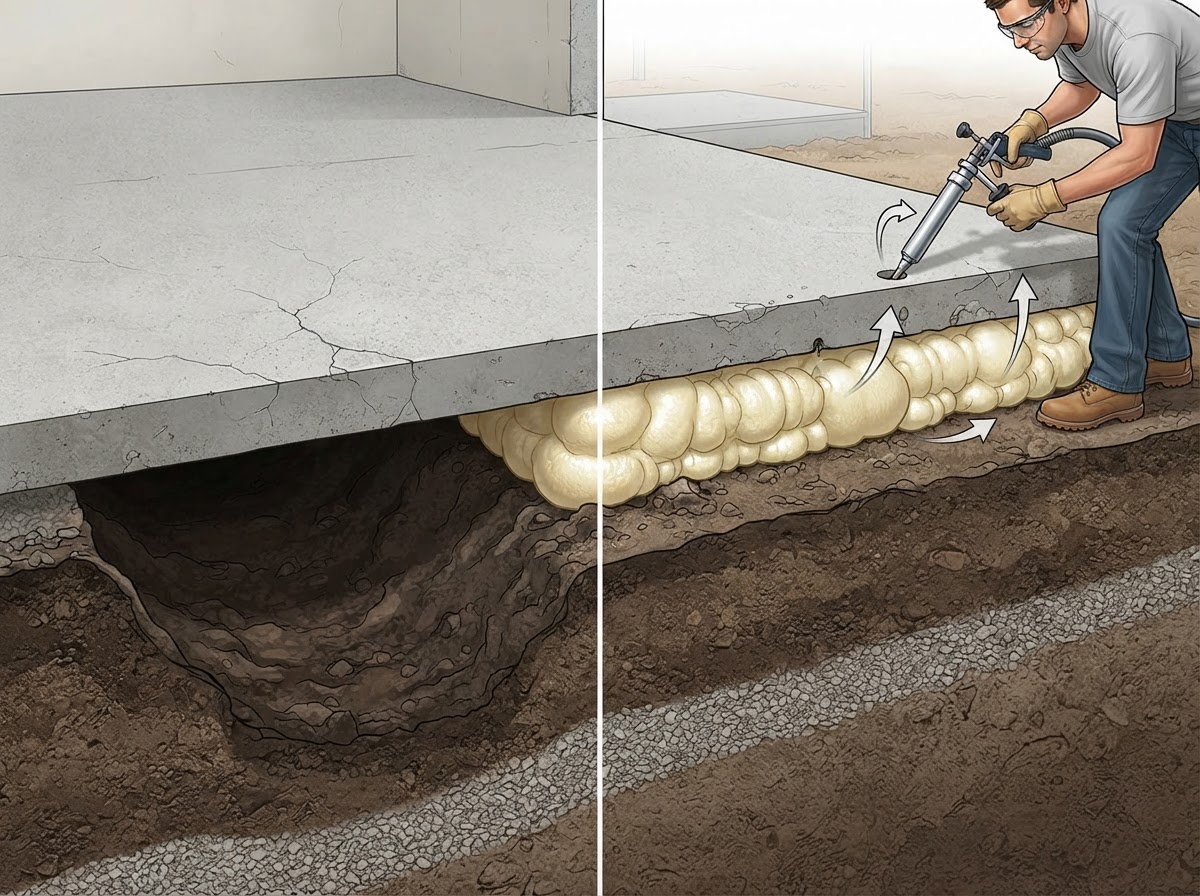
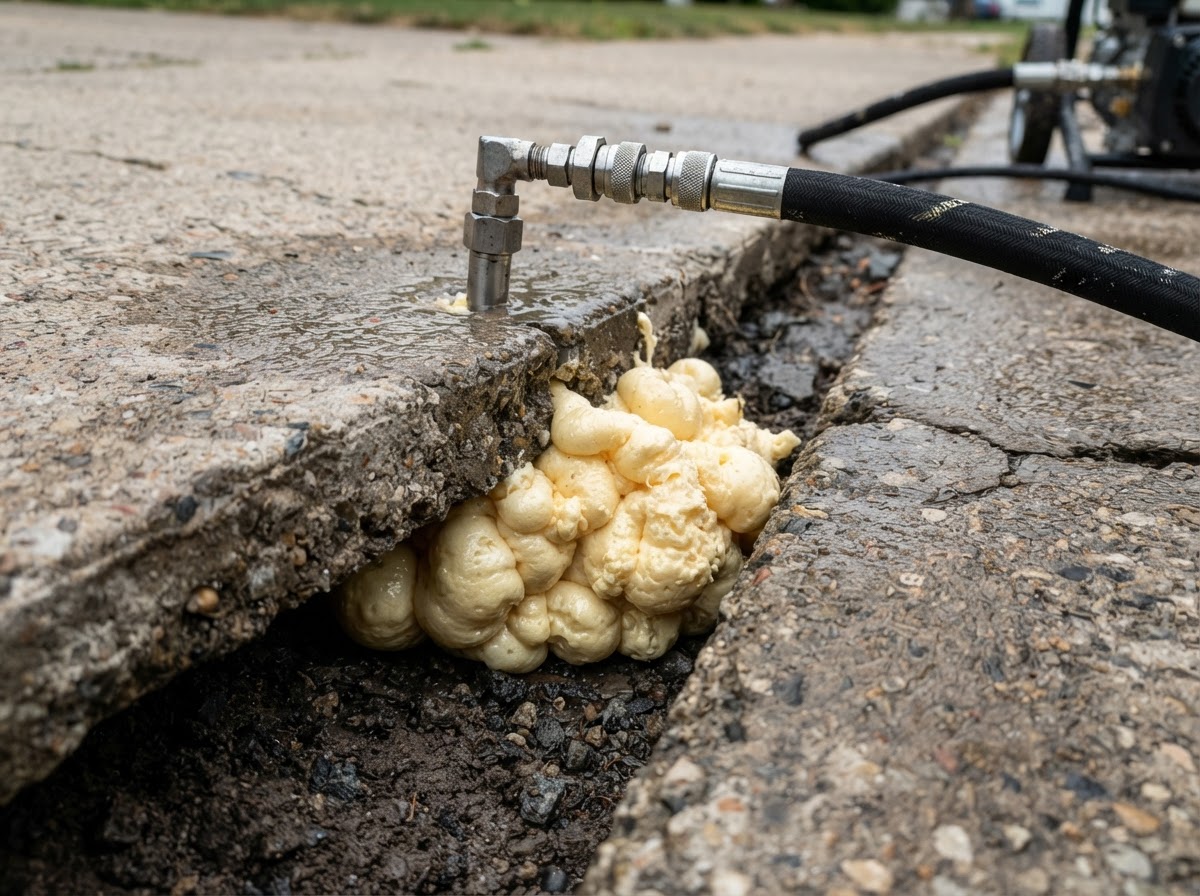
Polyurethane foam injection through small holes in a concrete slab

Polyjacking and Polyurethane Foam Leveling

Polyjacking uses expanding polyurethane foam injected through a compact pattern of small injection holes in the slab. It is used on driveways, sidewalks, patios, pool decks, and other residential and commercial slabs where the concrete is intact but has settled or lost support beneath it.

As the polyurethane material expands beneath the concrete it fills voids and produces a controlled lift at the injection points. The material is lightweight, which adds little load to the underlying soil, and the small injection openings keep disruption to the surface minimal compared to traditional slurry methods.

The result is a more even slab with restored support and improved transitions, achieved with small access holes and a fast-curing material — though polyjacking is not universally suitable for every slab, and an inspection determines whether it is the right fit.
Learn about polyjacking
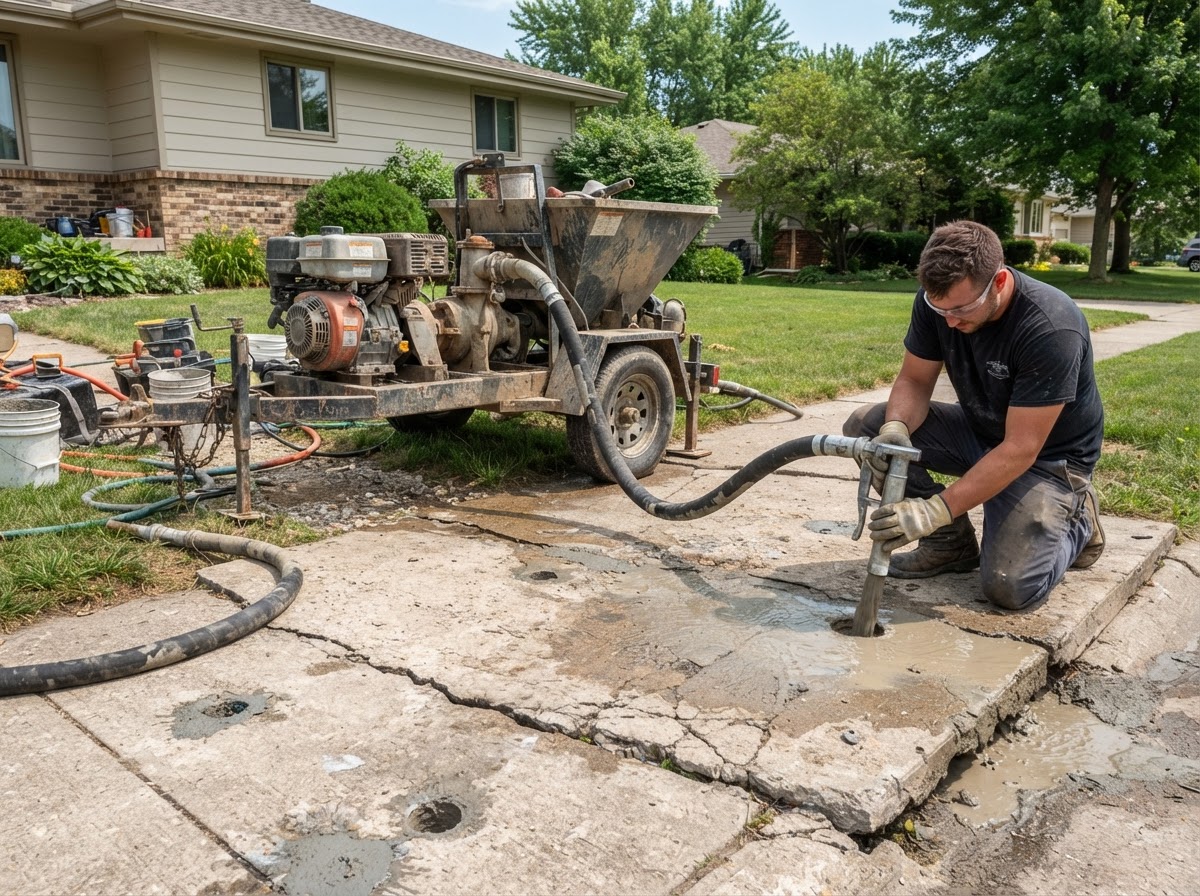
Mudjacking cementitious slurry being pumped through holes in a concrete slab

Mudjacking

Mudjacking pumps a cementitious slurry under pressure through larger access holes in the slab to fill voids and raise the concrete. It is an established concrete-leveling method used on suitable slabs where the concrete is intact but has settled and needs lifting.

The slurry is denser and heavier than polyurethane foam, and the access holes are larger, but the material fills voids and provides lifting force through the grout placed beneath the slab. Mudjacking is often a more economical option for larger lifts on slabs where the comparative weight, access, and material considerations make a cementitious slurry the practical choice.

The result is a raised, more even slab with filled voids beneath it, achieved with a proven slurry method — though the slurry needs time to set before the area takes full traffic, and suitable project selection determines when mudjacking is the right fit.

Learn about mudjacking
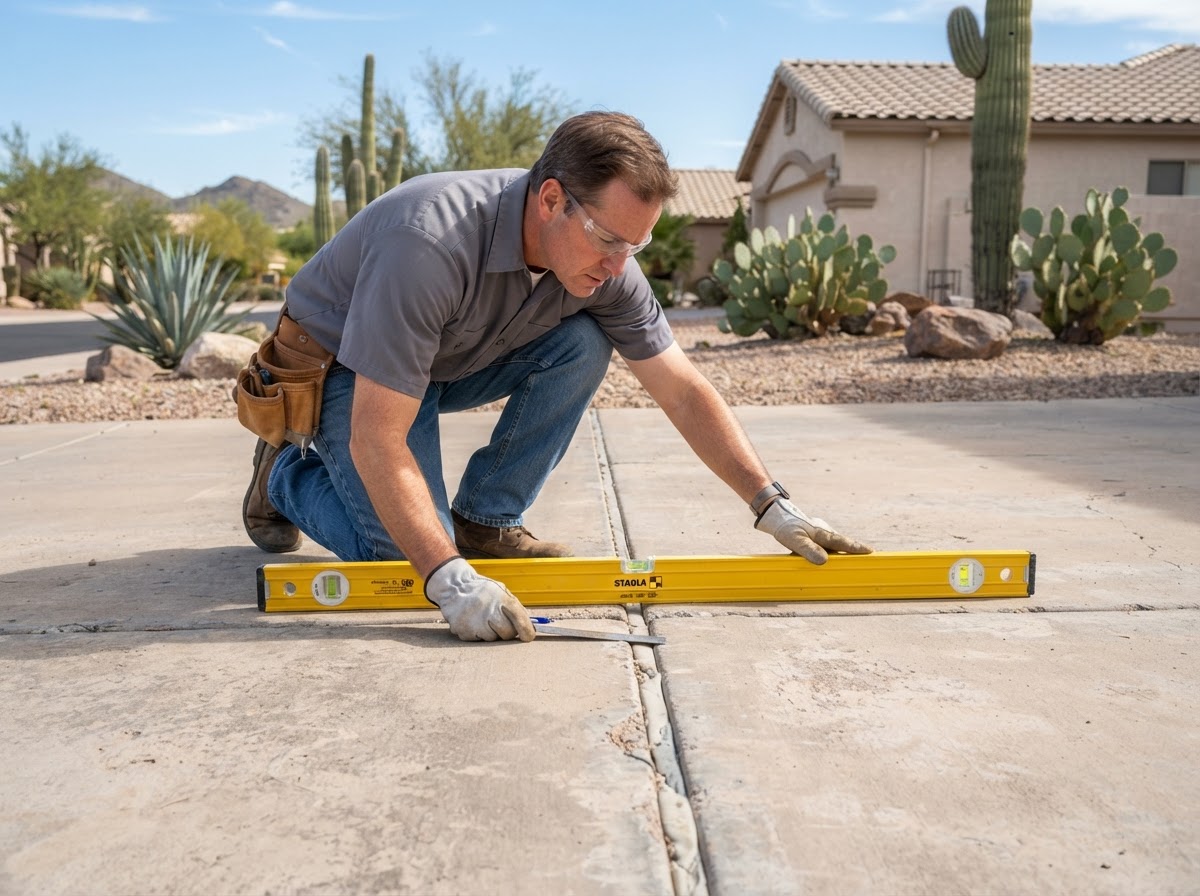
Technician checking slab elevation between adjacent concrete panels

Concrete Slab Lifting

Concrete slab lifting is the act of raising a settled slab back toward its original elevation, and it is the outcome that polyjacking and mudjacking both achieve. It applies to any intact slab — driveway, sidewalk, patio, pool deck, or garage floor — that has dropped, tilted, or lost support but is still serviceable.

A lifting material is introduced at lift points beneath the slab to fill the void and raise the concrete in a controlled way, with the material and injection pattern chosen for the slab thickness, access, void size, and the amount of elevation that needs to be recovered. Slab lifting is not a separate material — it is the result of applying the right leveling method.

The result is a restored slab elevation with reduced trip hazards and improved transitions between panels, preserving the existing concrete instead of replacing it.

See slab lifting details
Void filling beneath a concrete slab to restore lost support

Concrete Void Filling

Concrete void filling addresses the gaps that form beneath a slab when soil erodes or settles away from the underside of the concrete. It is used on slabs where the support beneath the concrete has been lost, whether or not the surface has dropped significantly.

Material is introduced beneath the slab to fill the void and re-establish bearing under the concrete. The material and placement are chosen according to the project conditions — the size and depth of the void, access, and whether stabilization alone or stabilization plus lift is the objective.

The result is a slab with restored support beneath it, reducing the risk of future settlement and cracking where the underlying void has been addressed.

Slab stabilization work restoring support beneath a concrete surface

Slab Stabilization

Slab stabilization focuses on restoring support beneath a concrete slab where the soil beneath it has eroded, settled, or otherwise moved away. It is used when the objective is to re-establish bearing under the concrete rather than to raise the surface significantly.

Material is placed beneath the slab to fill the void and stabilize the support, reducing the unsupported condition that can lead to cracking and further movement. The approach is chosen based on the slab condition, the size of the void, and whether any lift is also needed.

The result is a slab with more reliable support beneath it, which helps reduce the conditions that contribute to future movement — without making any unsupported claim that future soil movement can never occur.

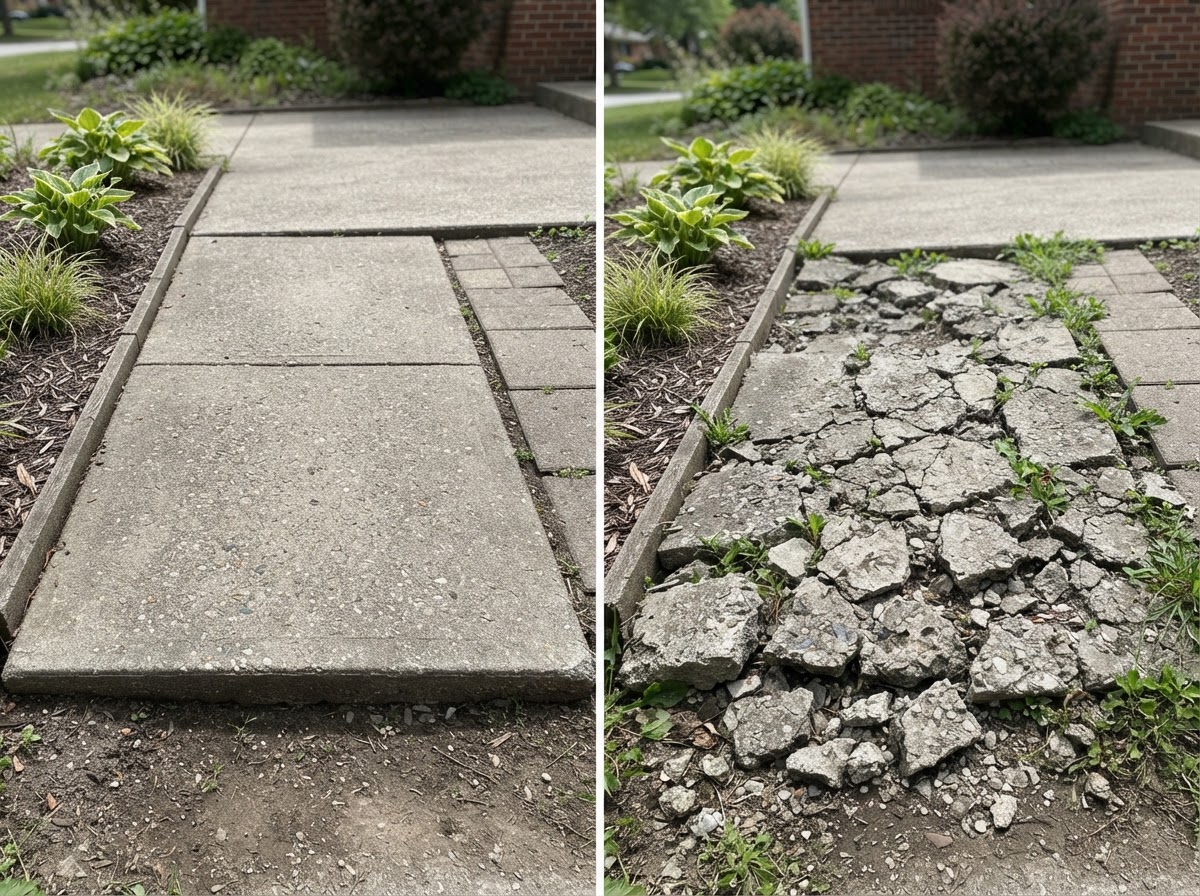
Comparison of an intact settled slab and a badly deteriorated cracked slab

Concrete Replacement

Concrete replacement is the alternative to leveling when the slab itself is badly deteriorated, severely fragmented, or extensively cracked to the point that lifting is not a reliable repair. It is a decision point, not a leveling method — and it applies when the concrete material has reached the end of its serviceable life.

When a slab is severely broken, deteriorated, or its geometry and condition make leveling impractical, removing and replacing the concrete becomes the more appropriate and more economical path than attempting to lift unsound material. An honest inspection identifies when a slab has crossed that line.

The result is new concrete where the old slab could not be preserved — and the assurance that leveling was not attempted on a slab that could not support it.

Polyjacking vs. Mudjacking: What Is the Difference?

Both methods lift settled concrete, but they use different materials, access holes, and project characteristics. Neither is universally superior — the right choice depends on the slab.

CharacteristicPolyjackingMudjacking
Lifting materialExpanding polyurethane foamCementitious slurry (grout)
Access-hole sizeSmall injection holesLarger access holes relative to foam
Material weightLightweight, little added load on soilDenser and heavier than foam
Lift controlControlled expansion and liftPressure-based slurry lift
Curing / return to useFoam cures fast, often quicker return to useSlurry needs time to set before full traffic
Typical project fitResidential slabs, pool decks, neat-finish areasSuitable slabs and larger lifts
Void filling capabilityFills voids as it expandsFills voids with slurry
Cost factorsMaterial cost, injection locations, areaOften more economical for larger lifts; material volume, area
LimitationsNot suitable for every slab conditionLarger holes, heavier material, slower return to use

How Do We Choose a Concrete Leveling Method?

Method selection is driven by what the inspection finds. These are the factors that determine which method fits a given slab.

Slab Condition

The condition of the concrete itself is the first filter. An intact slab that has settled is a candidate for lifting; a badly broken or deteriorated slab may need replacement. Cracking, spalling, and fragmentation all affect whether leveling is appropriate.

Amount and Pattern of Settlement

How much the slab has dropped and where it has settled — a single panel, an edge, or a corner — determines how much lift is needed and where lifting points should be placed. The settlement pattern guides the injection layout.

Void Size and Lost Support

The size and depth of any void beneath the slab affects the material volume required and whether the objective is lifting, stabilization, or both. A large void may need filling before any lift is attempted.

Access Around the Concrete

Access to the slab and the surrounding area affects which equipment and method can be used. Tight residential spaces, finished surfaces, and obstacles all influence method selection and injection placement.

Adjacent Surfaces and Drainage

The relationship to adjacent panels, joints, and drainage matters because the lift must improve transitions and surface slope rather than create new problems. Control joints and expansion joints are part of the evaluation.

Repair Cost Compared With Replacement

The cost of leveling is weighed against the cost of replacement for the specific slab. When the concrete is sound, leveling is usually more economical; when it is badly deteriorated, replacement may be the better investment.

How a Concrete Leveling Evaluation Works

  1. 1

    Inspect the slab

    The concrete is inspected for settlement, voids, cracking, and overall condition to determine whether leveling is appropriate at all.

  2. 2

    Review transitions and surrounding grade

    The elevation differences between panels, the surrounding grade, drainage, and control and expansion joints are reviewed to understand how the slab is moving.

  3. 3

    Identify settlement and support concerns

    Likely void areas and lost-support conditions are located so the repair targets the actual cause beneath the concrete, not just the visible symptom.

  4. 4

    Compare method fit

    Polyjacking, mudjacking, void filling, or replacement are compared against the slab condition, void size, access, and lift required to choose the right approach.

  5. 5

    Provide recommended scope and estimate

    A recommended scope and project-specific estimate are provided so you can decide with the facts in front of you — no hazardous procedural detail is required of the property owner.

What Affects the Cost of Polyjacking or Mudjacking in Gilbert?

Exact price depends on the specifics of your slab and is set after an on-site evaluation. Detailed local dollar ranges are not published here because responsible pricing requires inspecting the project. These factors show what moves the number.

Job typeTypical rangeWhat affects price
Polyjacking / polyurethane foam levelingProject-specific estimateDriven by area and number of panels, lift height, required material volume, void volume, access, slab thickness, number of injection locations, and whether stabilization or lifting is needed. Material cost and setup or minimum mobilization also factor in.
Mudjacking / cementitious slurry levelingProject-specific estimateDriven by area and number of panels, lift height, slurry volume, void volume, access, slab thickness and condition, method, setup or minimum mobilization, and adjacent features. Often more economical for larger lifts on suitable slabs.
Void filling / slab stabilizationProject-specific estimateDriven primarily by material volume required to fill the void, access, number of injection points, and whether a lift is also needed. Stabilization-only work differs in scope from elevation correction.
Method comparison and replacement evaluationProject-specific estimateWhen slab condition makes leveling impractical, replacement cost is compared against leveling cost so you can choose the more economical path for the specific concrete.

Not Sure Which Method Fits Your Slab?

An on-site evaluation is the right starting point. Get a clear recommendation and estimate for your Gilbert property.

Call 602-905-1220Or fill out the form →

Request an Estimate

Tell us about your project. We'll follow up with clear pricing and next steps.

The customer/project address for the work.


Consent is optional. You may request an estimate without opting in to text messages.

What is the difference between concrete leveling and slab lifting?

Concrete leveling is the overall process of correcting settled or uneven concrete, while slab lifting is the specific act of raising a settled slab — which is one technique used within concrete leveling. Slab lifting can be performed with polyurethane foam, a mudjacking slurry, or void filling. The terms overlap, but leveling is the broader service and lifting is the action of raising the slab.

What is polyjacking?

Polyjacking is a concrete leveling method that injects expanding polyurethane foam through small holes in the slab. As the foam expands beneath the concrete it fills voids and produces a controlled lift. The material is lightweight and the injection holes are small, which suits many residential driveways, sidewalks, patios, and pool decks. See our polyjacking page for more detail.

What is mudjacking?

Mudjacking is a concrete leveling method that pumps a cementitious slurry under pressure through larger access holes in the slab to fill voids and raise the concrete. The slurry is denser and heavier than foam, and the holes are larger, but mudjacking remains a useful and often more economical option for suitable slabs and larger lifts. See our mudjacking page for more detail.

Is polyurethane foam lighter than mudjacking slurry?

Yes, polyurethane foam is significantly lighter than the cementitious slurry used in mudjacking. The lightweight foam adds little load to the underlying soil, which is an advantage on slabs where additional weight could be a concern. Mudjacking slurry is denser and heavier, which can be suitable for larger lifts on slabs that can support the added material weight.

Does every settled slab need to be lifted?

No, not every settled slab needs to be lifted. Some slabs need void filling and stabilization to restore support beneath the concrete without raising the surface, especially when the elevation is already close to correct but the support beneath it has been lost. The objective — lifting versus stabilization — depends on what the inspection finds beneath the slab.

Can voids beneath concrete be filled without raising the slab very much?

Yes, voids beneath concrete can be filled with minimal lift when the goal is stabilization rather than elevation correction. Material is introduced beneath the slab to fill the gap and re-establish bearing, which restores support without forcing the slab upward. This is the right approach when the surface elevation is acceptable but the support beneath it has been lost.

How do you decide whether leveling or replacement makes more sense?

The decision between leveling and replacement is based on the condition of the concrete itself. Leveling makes sense when the slab is largely intact but has settled or lost support. Replacement makes sense when the concrete is badly deteriorated, severely cracked, fragmented, or no longer structurally sound. An inspection determines which path fits the specific slab.

Which concrete leveling method should I request for my Gilbert property?

The best starting point is an on-site evaluation rather than choosing a method from a website alone. The right method depends on your slab condition, the size and depth of any void, how much elevation needs to be recovered, access, and project economics. After inspecting the concrete, we recommend the method — polyjacking, mudjacking, or void filling — that fits the actual conditions beneath your slab.

Request a Concrete Leveling Estimate

Talk to a Gilbert concrete leveling specialist with 10+ years of experience. Insured work, clear pricing, and a straightforward process — no pressure.

602-905-1220

Request an Estimate

Tell us about your project. We'll follow up with clear pricing and next steps.

The customer/project address for the work.


Consent is optional. You may request an estimate without opting in to text messages.