10+ Years ExperienceInsured
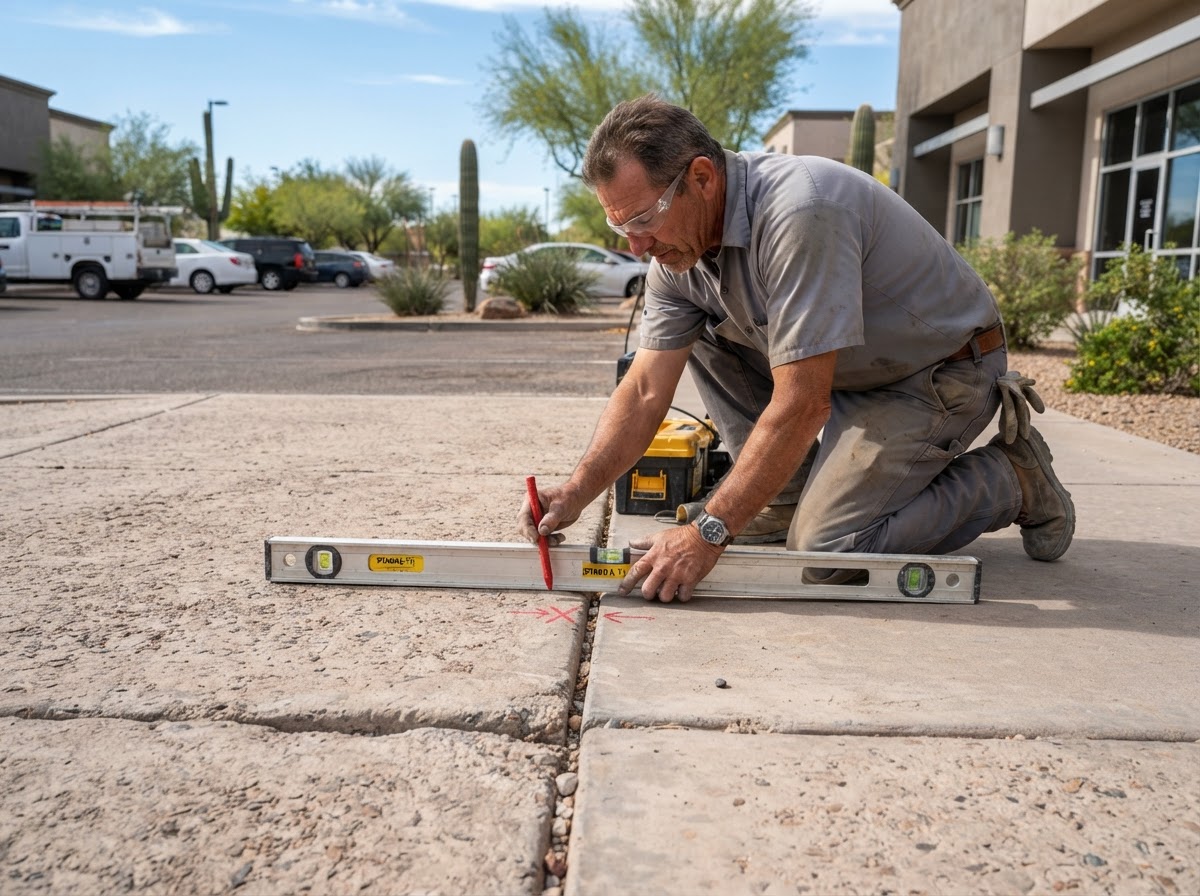
Concrete leveling technician assessing an uneven commercial walkway in a Gilbert, Arizona development

10+ Years Experience · Insured

Commercial Concrete Leveling in Gilbert, AZ

We level and stabilize settled commercial and HOA flatwork — sidewalks, common areas, multifamily walkways, and retail pedestrian surfaces — reducing trip hazards and preserving usable concrete without a full tear-out.

Request an Estimate

Tell us about your project. We'll follow up with clear pricing and next steps.

The customer/project address for the work.


Consent is optional. You may request an estimate without opting in to text messages.

Commercial concrete leveling addresses settled exterior flatwork and selected slabs on properties that serve the public and their residents — HOAs, multifamily communities, apartment properties, office and retail sites, pedestrian walkways, and common areas. On these properties, settled sidewalk panels and uneven pedestrian transitions are more than a cosmetic issue: they create trip hazards and liability concerns for the property managers, associations, and owners responsible for them. Commercial leveling raises the settled panels back toward alignment using polyurethane foam or a cementitious mudjacking slurry, reducing trip hazards across pedestrian routes without closing an entire area for a full demolition and repour.

The work applies where the existing concrete remains suitable for lifting or stabilization — intact slabs that have settled, tilted, or lost support. Trip-transition reduction, pedestrian usability, drainage, access planning, and avoiding unnecessary replacement are the legitimate decision factors. Some projects benefit from phased scheduling and access coordination so walkways and entries stay usable while repairs progress. With 10+ years of experience and insured service, Gilbert Concrete Leveling helps Gilbert property managers evaluate commercial flatwork honestly. Concrete leveling is not a blanket substitute for structural or foundation repair, and no universal ADA or code compliance is promised without a project-specific evaluation. Learn more on our overview or about page.

Why Gilbert Property Managers Choose Gilbert Concrete Leveling

Commercial and HOA flatwork demands a careful evaluation of access, scheduling, and slab condition. These are the specific reasons property managers work with us.

  • 10+ Years of Experience

    A decade of concrete leveling and lifting across residential and commercial flatwork, including HOA and common-area pedestrian surfaces.

  • Insured

    Gilbert Concrete Leveling is insured for the commercial concrete leveling work we perform on your property.

  • Commercial and HOA Flatwork Evaluation

    We evaluate shared walkways, common areas, and pedestrian surfaces with attention to the access and liability realities of active properties.

  • Multiple Leveling Methods

    We select between polyurethane foam, mudjacking, and void filling based on what the commercial slab and soil actually require.

  • Repair-vs-Replacement Guidance

    You get an honest comparison of which panels are good candidates for leveling and which need replacement, scoped across the whole property.

  • Clear Scope and Estimate Communication

    Scope, pricing, and phasing are explained plainly so property managers and boards can make informed decisions.

  • Access and Site Coordination

    Work can be planned around business hours, resident access, and pedestrian traffic where practical through phased scheduling.

  • Trip-Transition and Drainage Awareness

    We address the elevation offsets and drainage problems that create trip hazards and water collection on commercial flatwork.

What Commercial Concrete Leveling Covers in Gilbert

Commercial concrete leveling covers settled exterior flatwork and selected slabs where the existing concrete remains suitable for lifting or stabilization. That includes HOA sidewalks and common areas, multifamily and apartment walkways, retail and office pedestrian surfaces, entries, drive approaches, and other commercial flatwork. In each case the work targets the elevation, support, and transition problems that create trip hazards and drainage issues across pedestrian routes.

When the concrete is largely intact but has settled, lifting and stabilization can preserve the slab and avoid the disruption and cost of replacement. When the concrete is badly deteriorated or severely broken, replacement may be more appropriate. And concrete leveling is not a blanket substitute for structural or foundation repair — concerns that affect the structure itself require a different type of evaluation. An inspection determines which category your commercial flatwork falls into.

Commercial and HOA Concrete Leveling Services

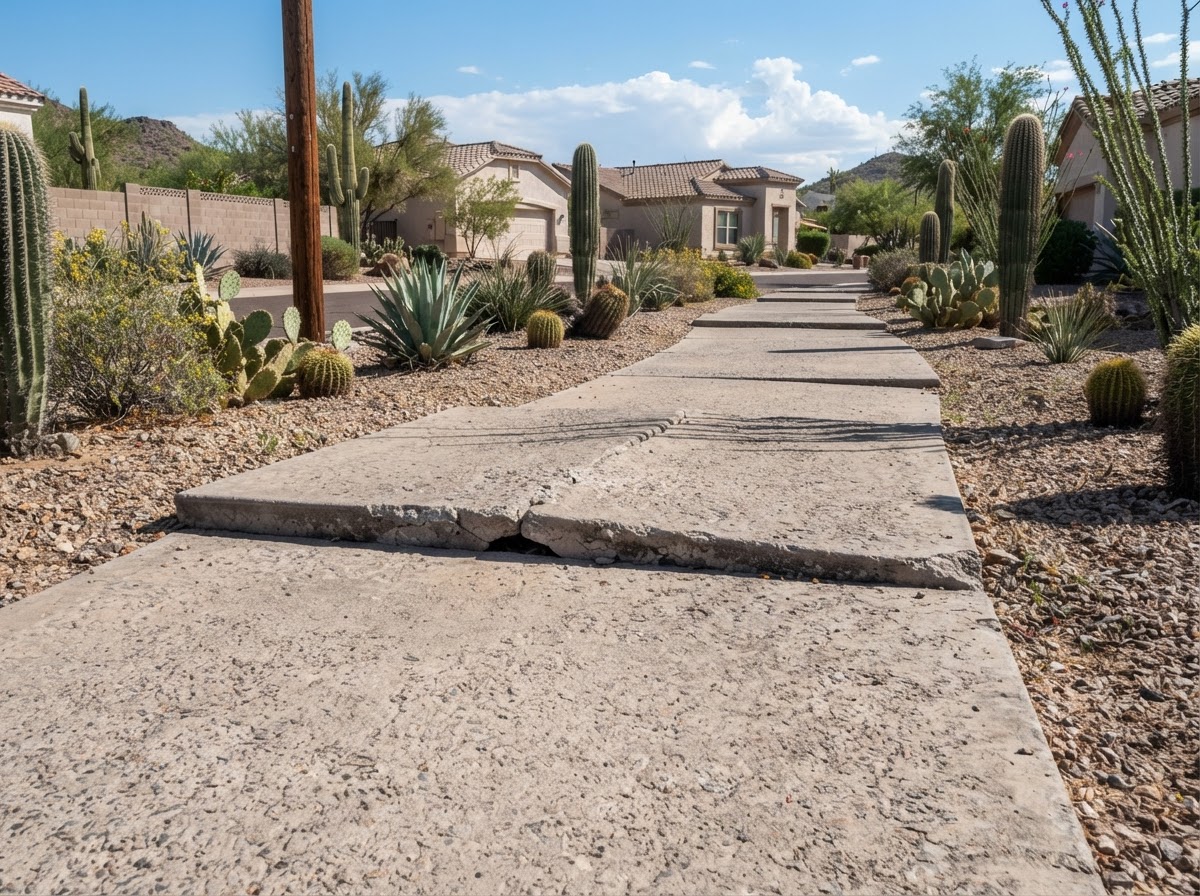
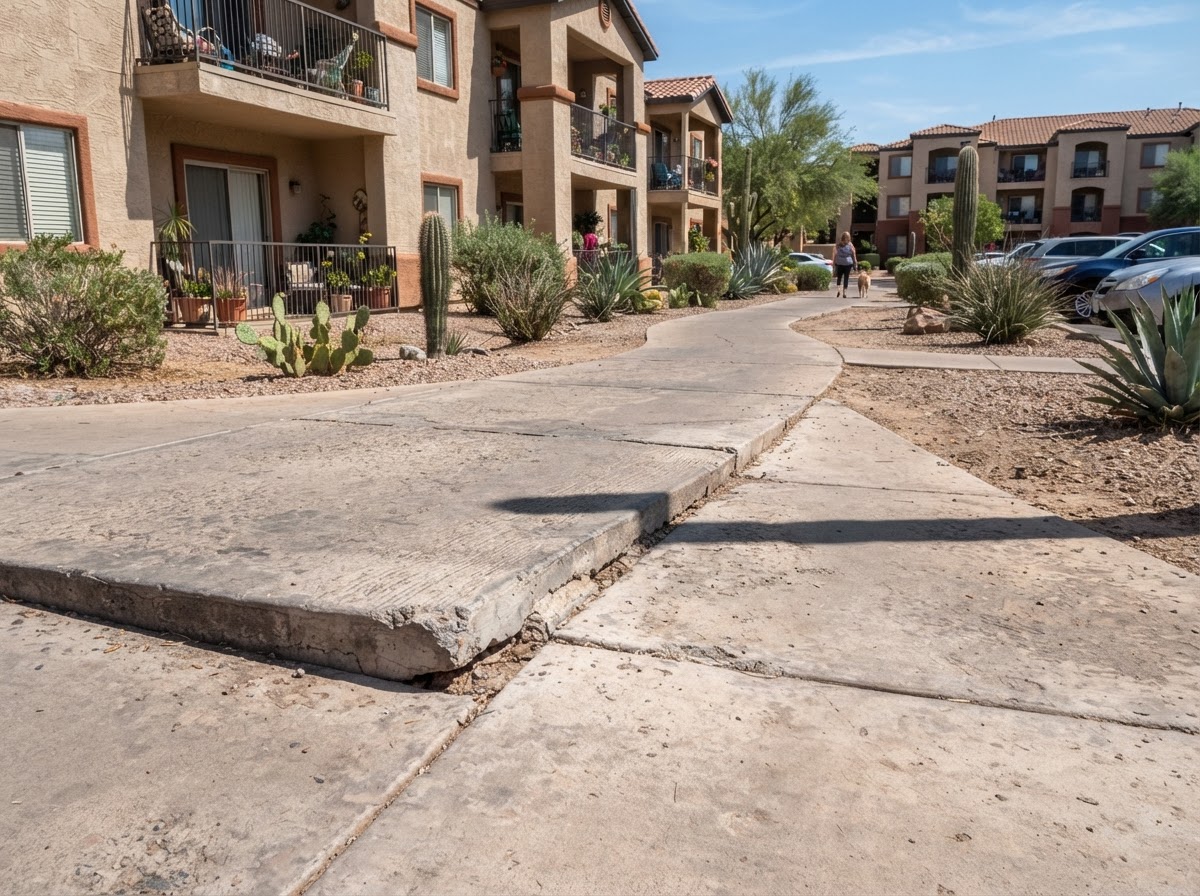
HOA common-area sidewalk with settled uneven slabs at the joints

HOA Sidewalk and Common-Area Leveling

HOA sidewalk and common-area leveling addresses settled panels on shared walkways, common-area transitions, and pedestrian routes within a community. These shared surfaces are where settlement creates trip hazards across routes that residents and visitors use every day.

Lifting material is introduced beneath the settled panels to raise them back toward alignment, with access coordination so walkways remain usable during the work. Intact panels are preserved rather than cut out and repoured, which keeps the common area functional while repairs progress.

The result is a safer, more even pedestrian surface across the common area with reduced trip hazards at the joints, addressed in a way that fits the access and scheduling needs of an active community.
Learn about HOA & commercial leveling
Multifamily apartment community walkway with settled uneven slabs

Apartment and Multifamily Concrete Leveling

Apartment and multifamily concrete leveling addresses settled pedestrian walkways, entries, courtyards, and common flatwork within a multifamily community. Tenant-access routes are the priority, since uneven transitions on these paths affect daily foot traffic.

Lifting material is placed beneath the settled slabs to fill voids and recover elevation, with the method chosen for the slab condition and access. Work is planned around tenant access where practical so walkways and entries stay usable during the project.

The outcome is a more even, safer pedestrian surface for residents and visitors, with reduced trip hazards and improved transitions, without the extended disruption of tearing out and repouring walkway sections.

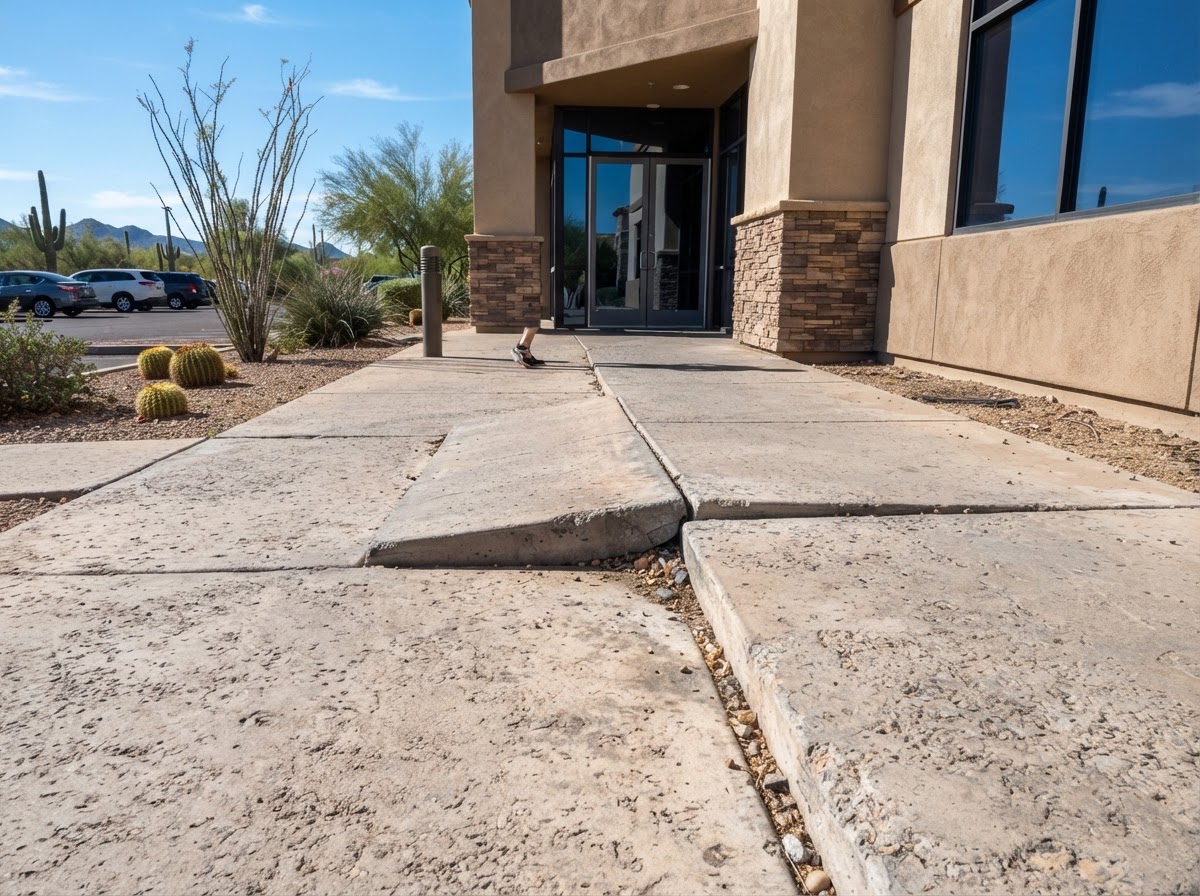
Retail or office building pedestrian walkway with settled slabs near an entrance

Retail and Office Walkway Leveling

Retail and office walkway leveling addresses settled pedestrian concrete around customer and employee areas, including entries, walkways, and transitions near entrances. Settled slabs in these locations create trip hazards on routes that serve customers and staff throughout business hours.

Lifting material is introduced beneath the settled panels to raise them back toward alignment, with scheduling planned around site use where practical so the business can keep operating during the work. The method is chosen for the slab condition, access, and the surrounding pedestrian surface.

The result is a safer, more even pedestrian surface with reduced trip hazards and improved transitions, addressed with minimal disruption to the active commercial site.

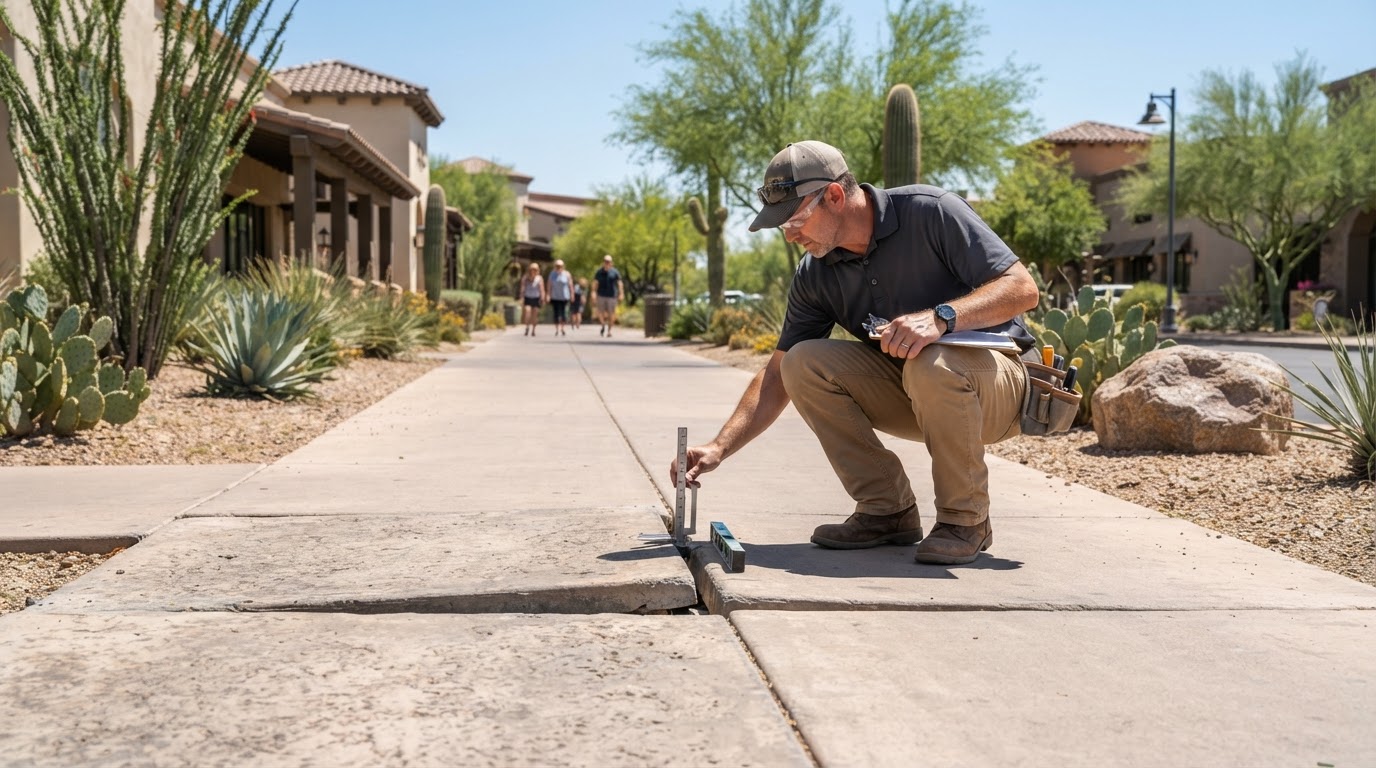
Technician checking slab elevation and transition height on a commercial walkway

Commercial Trip-Hazard Correction

Commercial trip-hazard correction targets the raised lip at a joint where one commercial concrete panel has settled or heaved relative to the next, creating a stumble point on a pedestrian route. These offsets commonly occur on sidewalks, walkways, and common-area flatwork.

Where the concrete is intact, the lower panel is lifted back into alignment to remove the height difference at the joint. Whether the result meets a specific code or standard requires a project-specific evaluation, and no universal compliance is guaranteed. Panels that are shattered or unsound may need replacement rather than lifting.

The result is a safer walking surface with the trip hazard reduced at the joint, improving safety for customers, residents, and employees without a full slab replacement.

Learn about trip hazard repair
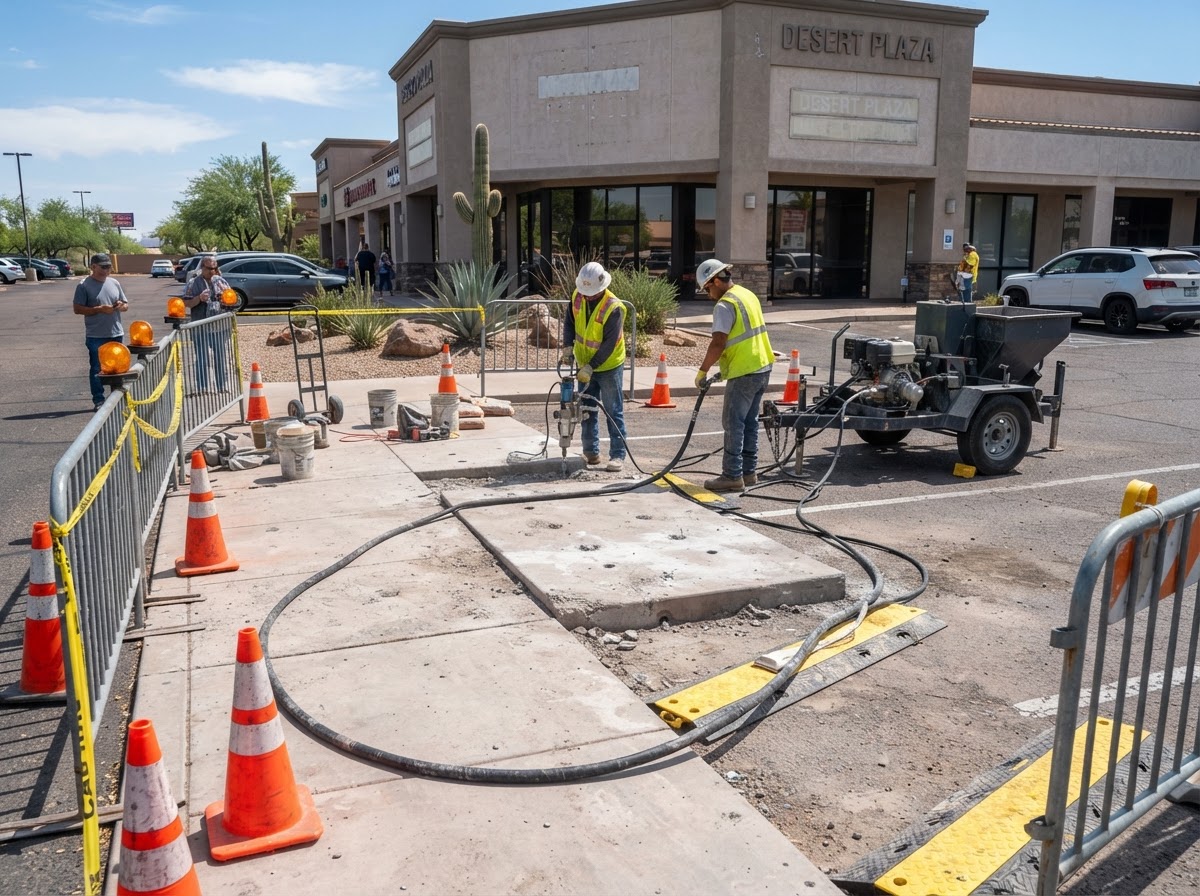
Commercial concrete leveling work zone with site-control setup around a sidewalk section

Commercial Slab Lifting

Commercial slab lifting raises settled commercial flatwork and selected slabs back toward their original elevation instead of removing the concrete. It applies to walkways, entries, and other pedestrian surfaces where the slab is intact but has dropped, tilted, or lost support.

A lifting material — polyurethane foam through small injection holes or a cementitious mudjacking slurry through larger holes — is introduced at lifting points beneath the slab to fill voids and raise the concrete in a controlled way. The choice depends on slab condition, void size, access, and the transitions between adjacent panels.

The result is a more even commercial surface with restored support and improved transitions, preserving the existing concrete and avoiding the cost and disruption of a full tear-out.

Learn about slab lifting
Void filling and stabilization beneath a settled commercial concrete slab

Commercial Void Filling and Slab Stabilization

Commercial void filling and slab stabilization address the gap that forms beneath a commercial slab when soil erodes or settles away from the concrete. On shared pedestrian surfaces, lost support beneath a slab can lead to cracking and further movement that creates hazards.

Material is introduced beneath the slab to fill the void and re-establish bearing under the concrete. This is distinct from forcing an unnecessary lift — the goal may be to fill and stabilize rather than to raise the slab, especially when the surface elevation is close to correct but the support beneath it has been lost.

The result is a commercial slab with restored support beneath it, reducing the risk of future settlement and cracking where the underlying void has been addressed.

Learn about concrete void filling

When Commercial Concrete May Need Leveling

These are common signs that commercial flatwork may be a candidate for leveling. An on-site inspection confirms the cause and the right scope for the property.

Pedestrian Panels Have Developed Uneven Transitions

When one sidewalk or walkway panel has settled below its neighbor, the height difference at the joint becomes a trip hazard on a pedestrian route. Uneven transitions across shared walkways are one of the most common reasons property managers request commercial leveling.

Flatwork Has Settled Near an Entry or Curb

Settled concrete near a building entry, curb, or drive approach creates an uneven transition where foot traffic is heaviest. Settlement at these high-use locations affects both safety and accessibility on the property.

Water Is Collecting Around a Low Slab

When a commercial slab settles and creates a low spot, water collects in the depression instead of draining away. Standing water on a walkway or common area is a sign that the surface slope has changed and the slab may need lifting.

Concrete Shows Signs of Lost Support or Voids

A commercial slab that sounds hollow when tapped, or that shows cracking and movement consistent with lost support, may have a void underneath. Void filling and stabilization address that lost support before the surface drops further.

Replacement Would Disrupt a Large Usable Area

When only a few panels are settled but the surrounding area is sound and in use, leveling the problem panels avoids the disruption, cost, and downtime of tearing out a large usable section of flatwork.

How We Plan Commercial Concrete Leveling Projects

  1. 1

    Site and evaluation request

    A property manager or owner requests an evaluation by calling 602-905-1220 or submitting the form, providing the property address and a description of the concrete issue.

  2. 2

    Inspect concrete and access

    The settled flatwork is inspected for condition, settlement, voids, and cracking, and the access, pedestrian traffic, and site constraints around the work area are reviewed.

  3. 3

    Identify affected slabs and settlement pattern

    The affected panels and the settlement or void pattern across the property are mapped so the scope targets the actual problem areas rather than only the most visible symptom.

  4. 4

    Compare leveling, stabilization, and replacement options

    For each affected area, leveling, stabilization, or replacement is compared based on slab condition, so sound panels are lifted and unsound concrete is flagged for replacement.

  5. 5

    Plan work around site use where practical

    Where the property is active, the work is phased and scheduled around business hours, resident access, and pedestrian traffic to keep walkways and entries usable — zero downtime is not guaranteed.

  6. 6

    Perform and review work, cleanup, and next steps

    Controlled leveling or stabilization is performed, then the recovered elevation, transitions, drainage, and site cleanup are reviewed, with return-to-use guidance and any follow-up explained.

What Does Commercial Concrete Leveling Cost in Gilbert?

Exact price depends on the specifics of your property and is set after an on-site evaluation. Detailed local dollar ranges are not published here because responsible commercial pricing requires inspecting the project. These categories show what drives the cost.

Job typeTypical rangeWhat affects price
HOA / common-area panel levelingProject-specific estimateDriven by slab count and square footage, lift requirements, void and material volume, method, access, mobilization, and the extent of cracking or deterioration across the common area.
Multifamily walkway levelingProject-specific estimateDriven by area and number of panels, lift amount, void volume, method, access, working-area constraints, phased work, and adjoining pedestrian and vehicle surfaces.
Retail / office flatwork levelingProject-specific estimateDriven by square footage, lift requirements, void volume, method, access, mobilization, scheduling around site use, and the condition of the surrounding pedestrian surface.
Commercial void filling / stabilizationProject-specific estimateDriven primarily by material volume required to fill the void, access, number of injection points, and whether stabilization only or elevation correction is needed. Comparison against removal and replacement also factors in.

Need Commercial Concrete Leveled?

Get a clear scope and estimate for your Gilbert commercial or HOA property from an insured concrete leveling specialist.

Call 602-905-1220Or fill out the form →

Request an Estimate

Tell us about your project. We'll follow up with clear pricing and next steps.

The customer/project address for the work.


Consent is optional. You may request an estimate without opting in to text messages.

What types of commercial properties can use concrete leveling?

Commercial concrete leveling can be used on HOA common areas, multifamily and apartment communities, retail and office pedestrian surfaces, walkways, entries, and other commercial flatwork where the existing concrete is suitable for lifting or stabilization. The work applies to settled exterior flatwork and selected slabs rather than every concrete condition. An inspection determines whether a specific commercial slab is a candidate for leveling.

Can HOA sidewalk panels be lifted instead of replaced?

Yes, HOA sidewalk and common-area panels can often be lifted instead of replaced when the concrete is largely intact and the problem is settlement or lost support. Lifting material is introduced beneath the settled panels to raise them back toward alignment and reduce trip hazards across shared walkways. Panels that are shattered or structurally damaged may need replacement instead.

Can concrete leveling reduce uneven pedestrian transitions?

Yes, concrete leveling can reduce uneven pedestrian transitions by raising a settled panel back into alignment with its neighbor, removing the height difference at the joint. This addresses the elevation offset that creates the trip hazard on walkways and common areas. Whether the result meets a specific code or standard requires a project-specific evaluation, and no universal compliance is guaranteed.

Can work be planned around business or resident access?

Yes, commercial concrete leveling work can often be planned around business or resident access through phased scheduling and access coordination. Where a property has multiple settled sections, the work can be phased to keep walkways and access points usable while repairs progress. Zero downtime is not guaranteed, but site use and scheduling are part of the planning conversation.

Is polyjacking used for commercial concrete?

Yes, polyjacking is used for commercial concrete where the slab condition, access, and project requirements make polyurethane foam the appropriate method. The small injection holes and lightweight material suit many pedestrian surfaces and finished walkways. Whether polyjacking is the right choice for a specific commercial slab depends on the inspection and the conditions beneath it.

Can voids beneath commercial flatwork be stabilized?

Yes, voids beneath commercial flatwork can be stabilized by introducing material beneath the slab to fill the gap and re-establish bearing. This restores support under the concrete and can be done with minimal lift when the objective is stabilization rather than elevation correction. The approach is chosen based on the size of the void and the condition of the slab above it.

When is commercial concrete replacement a better choice?

Commercial concrete replacement is a better choice when the slab is badly deteriorated, severely cracked, fragmented, or no longer structurally sound. Leveling is designed for slabs that are largely intact but have settled or lost support; concrete that has failed cannot be reliably lifted into a lasting, usable surface. An inspection identifies when replacement is the more appropriate path.

How do I request an estimate for a Gilbert commercial property?

You can request an estimate for a Gilbert commercial property by calling 602-905-1220 or by filling out the estimate form on this page. Provide your name, phone number, email, project address, and a brief description of the concrete issue. A team member will follow up to discuss the property and schedule an on-site evaluation.

Request a Concrete Leveling Estimate

Talk to a Gilbert concrete leveling specialist with 10+ years of experience. Insured work, clear pricing, and a straightforward process — no pressure.

602-905-1220

Request an Estimate

Tell us about your project. We'll follow up with clear pricing and next steps.

The customer/project address for the work.


Consent is optional. You may request an estimate without opting in to text messages.