10+ Years ExperienceInsured
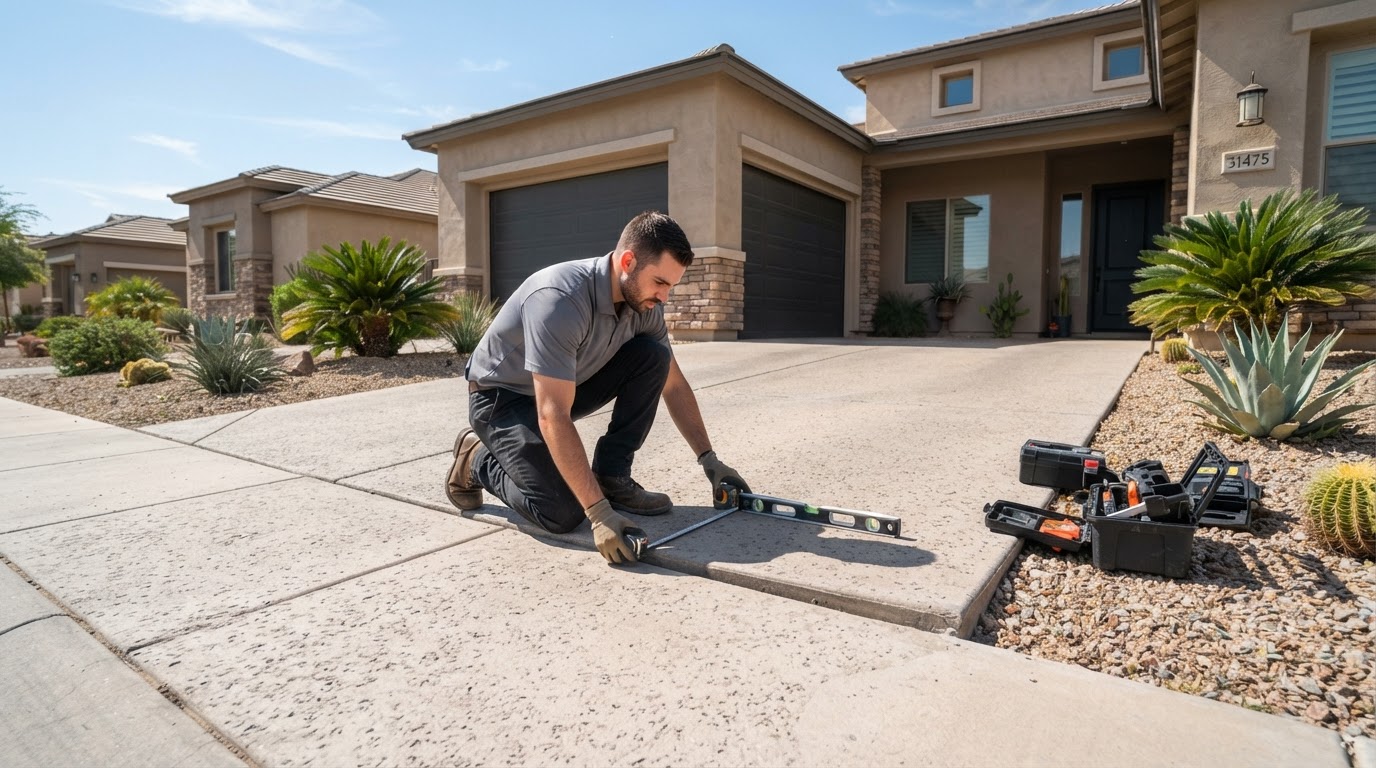
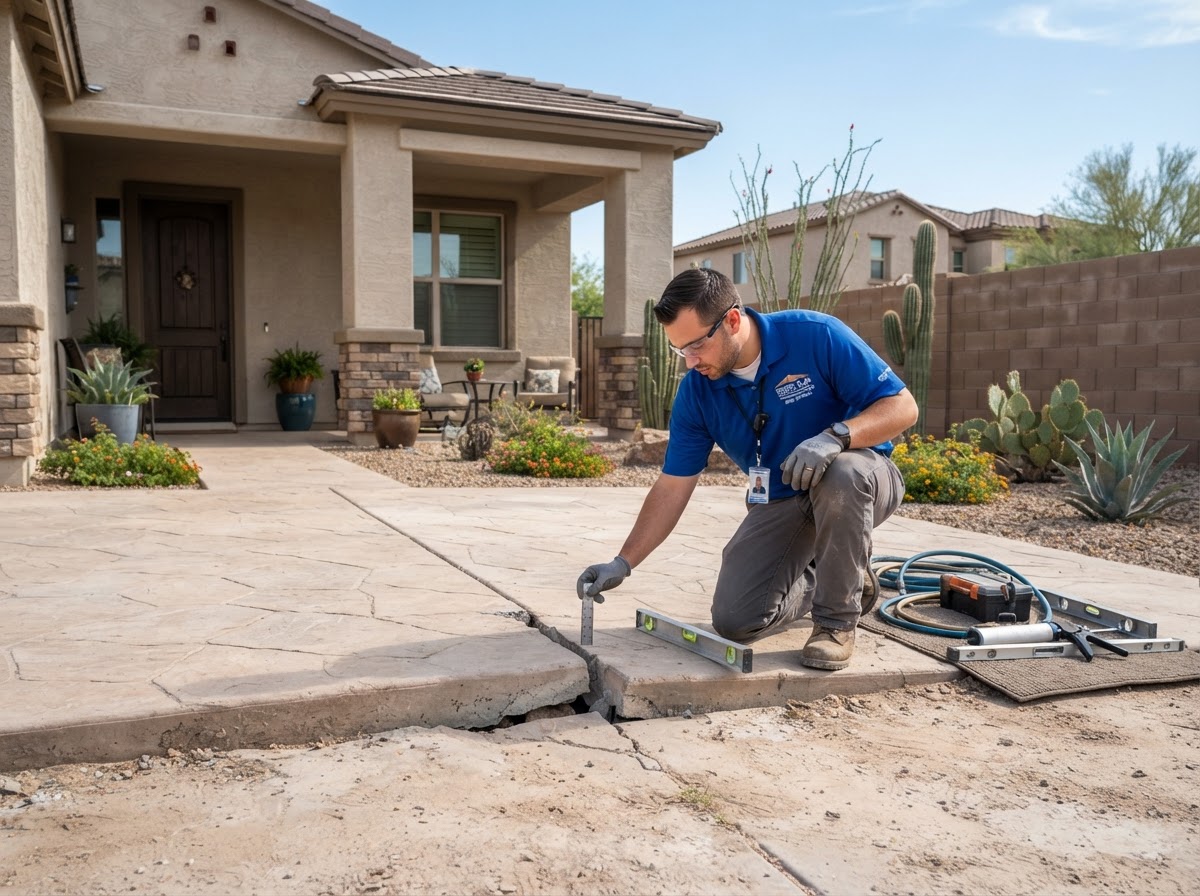
Concrete leveling technician assessing a settled driveway slab at a newer Queen Creek, Arizona stucco home

10+ Years Experience · Insured

Concrete Leveling Services in Queen Creek, AZ

We lift settled driveways, sidewalks, patios, and pool decks across Queen Creek's master-planned communities — preserving your existing concrete with the right leveling method for the slab and the soil beneath it.

Request an Estimate

Tell us about your project. We'll follow up with clear pricing and next steps.

The customer/project address for the work.


Consent is optional. You may request an estimate without opting in to text messages.

Queen Creek is one of the fastest-growing residential markets in the southeast Valley, and that growth has brought miles of new concrete flatwork — driveways, sidewalks, patios, pool decks, side-yard walkways, and HOA common areas across master-planned communities like Queen Creek Station, Hastings Farms, Meridian, Ironwood Crossing, and the Encanterra area. But newer concrete is not immune to settlement. When fill material, subgrade compaction, irrigation, or drainage conditions change beneath a slab, even recently poured concrete can lose support and drop. Gilbert Concrete Leveling helps Queen Creek property owners correct settled and uneven concrete with the right leveling method for the actual slab and soil conditions — preserving usable concrete rather than replacing it unnecessarily.

With 10+ years of experience and insured service, we evaluate each Queen Creek project on its own conditions. Polyjacking with expanding polyurethane foam, mudjacking with cementitious slurry, void filling, and slab stabilization each have a place depending on the slab type, settlement pattern, access, and whether the goal is elevation correction or support restoration. We serve Queen Creek properties along the Ellsworth Road, Ocotillo Road, Rittenhouse Road, Power Road, and Signal Butte Road corridors, as well as the Queen Creek Marketplace and Town Center area. Service availability depends on your specific project location within the Queen Creek area, so the first step is always an on-site evaluation.

Why Queen Creek Property Owners Choose Gilbert Concrete Leveling

Queen Creek's newer construction creates a different concrete-care conversation than older Valley neighborhoods. We bring condition-first evaluation and multiple leveling methods to every project.

  • 10+ Years of Experience

    More than a decade of hands-on concrete leveling work across Valley residential and commercial flatwork, including the newer developments that define Queen Creek.

  • Insured Service

    We carry insurance for residential and commercial concrete leveling projects, giving Queen Creek homeowners and property managers a measure of protection.

  • Residential Flatwork Specialization

    We focus on the flatwork Queen Creek properties actually have — driveways, sidewalks, patios, pool decks, side yards, and garage transitions.

  • Multiple Leveling Methods

    Polyjacking, mudjacking, void filling, and slab stabilization are all on the table. We recommend the method that fits your slab, not the only method we sell.

  • Newer-Development Subgrade Awareness

    We understand that recently placed fill and subgrade conditions in master-planned communities can contribute to settlement, and we factor that into our evaluation.

  • Irrigation and Drainage Context

    Queen Creek yards often combine desert landscaping with irrigation, and water movement around hardscape is a common contributor to slab support loss we look for.

  • Repair-vs-Replacement Guidance

    When your slab is intact but settled, leveling often makes sense. When concrete is badly deteriorated, we tell you — rather than pushing a lift that will not hold up.

  • Clear Estimates and Process

    You get a straightforward explanation of what we found, what we recommend, what it costs, and what happens next. No pressure, no vague scope.

Concrete Leveling Across Queen Creek

We provide concrete leveling services across Queen Creek's residential and commercial areas, including the master-planned communities along the Ellsworth Road, Ocotillo Road, Rittenhouse Road, Power Road, and Signal Butte Road corridors. Whether your property is near the Queen Creek Marketplace, the Town Center area, or in a newer subdivision, we can evaluate your settled concrete and recommend the appropriate leveling or stabilization approach.

We do not maintain a Queen Creek office, and service availability depends on your specific project location within the Queen Creek area. The best way to confirm we can help is to call 602-905-1220 or submit the form on this page with your project address.

Concrete Leveling Services We Provide in Queen Creek

Each service below corrects a specific type of settled or uneven Queen Creek concrete, from newer residential driveways to HOA common-area walkways.

Concrete leveling technician assessing a settled driveway slab at a newer Queen Creek stucco home

Concrete Slab Leveling

Concrete slab leveling in Queen Creek addresses settled or uneven flatwork across newer residential properties — driveways, sidewalks, patios, pool decks, and side-yard slabs where the concrete itself remains intact but has lost elevation or support. We evaluate the slab condition, the settlement pattern, and the surrounding grade before recommending a correction approach.

Depending on the project, we may use polyjacking with expanding polyurethane foam introduced through small injection points, mudjacking with cementitious slurry pumped through access holes, or void filling to restore support beneath the slab. The method is chosen based on slab thickness, lift amount, void size, access, and whether the goal is elevation correction or stabilization.

The practical outcome is a slab that sits closer to its intended elevation with restored support beneath it — reducing uneven transitions, improving usability, and preserving the existing concrete rather than tearing it out and repouring.
Learn more about concrete slab leveling →
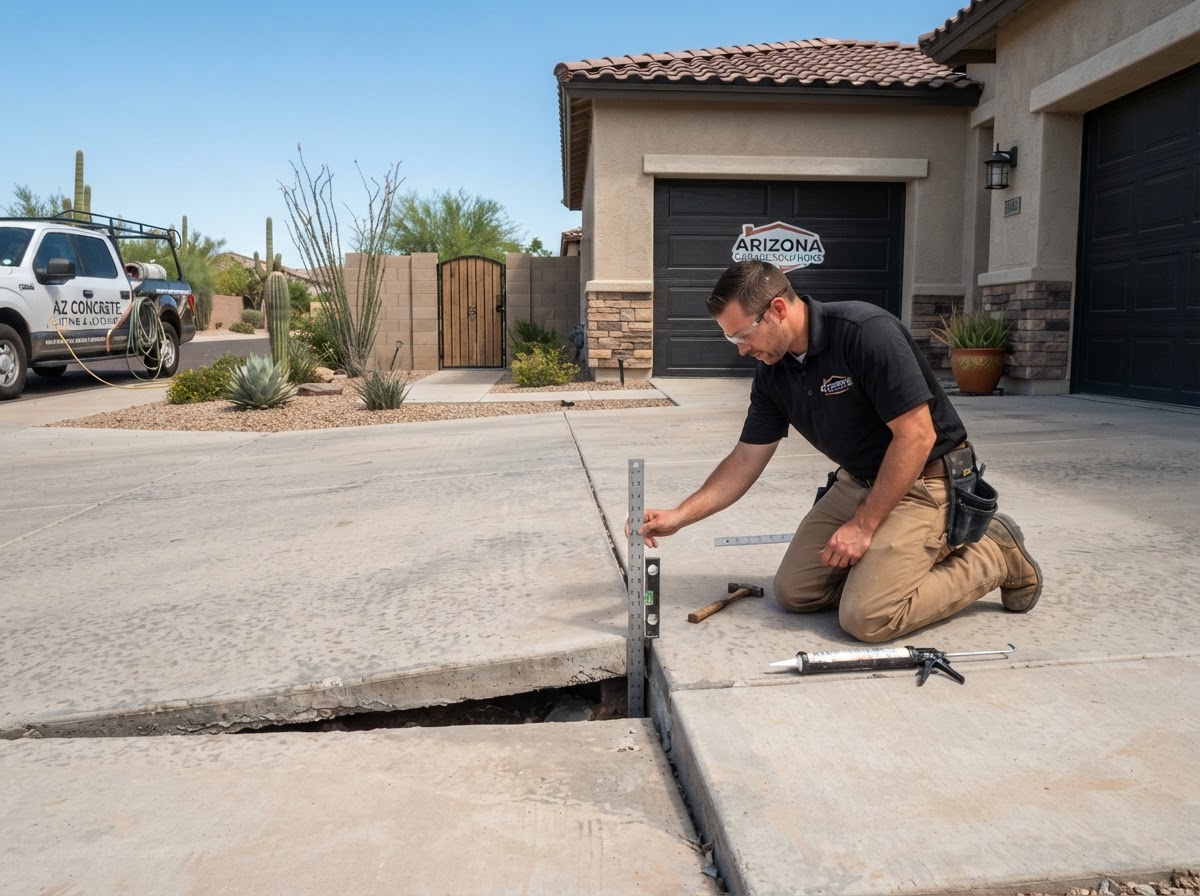
Technician assessing a settled driveway panel near the garage at a newer Queen Creek stucco home

Driveway Leveling

Driveway leveling in Queen Creek targets settled driveway panels — often where a panel has dropped near the garage transition, at the sidewalk crossing, or between adjoining panels in a newer subdivision. We assess the panel condition, control joints, expansion joints, and the relationship between the driveway, garage slab, and walkway.

Using polyjacking or mudjacking, we introduce lifting material beneath the settled panel through injection points or access holes, applying controlled lift to bring the panel closer to the adjoining surface. The method depends on panel size, lift amount, void volume, and access through gates or side yards common in Queen Creek layouts.

The result is a smoother driveway transition with reduced unevenness at the garage and sidewalk — improving vehicle access, reducing the trip transition at walkway crossings, and preserving the existing driveway concrete.

Learn more about driveway leveling →
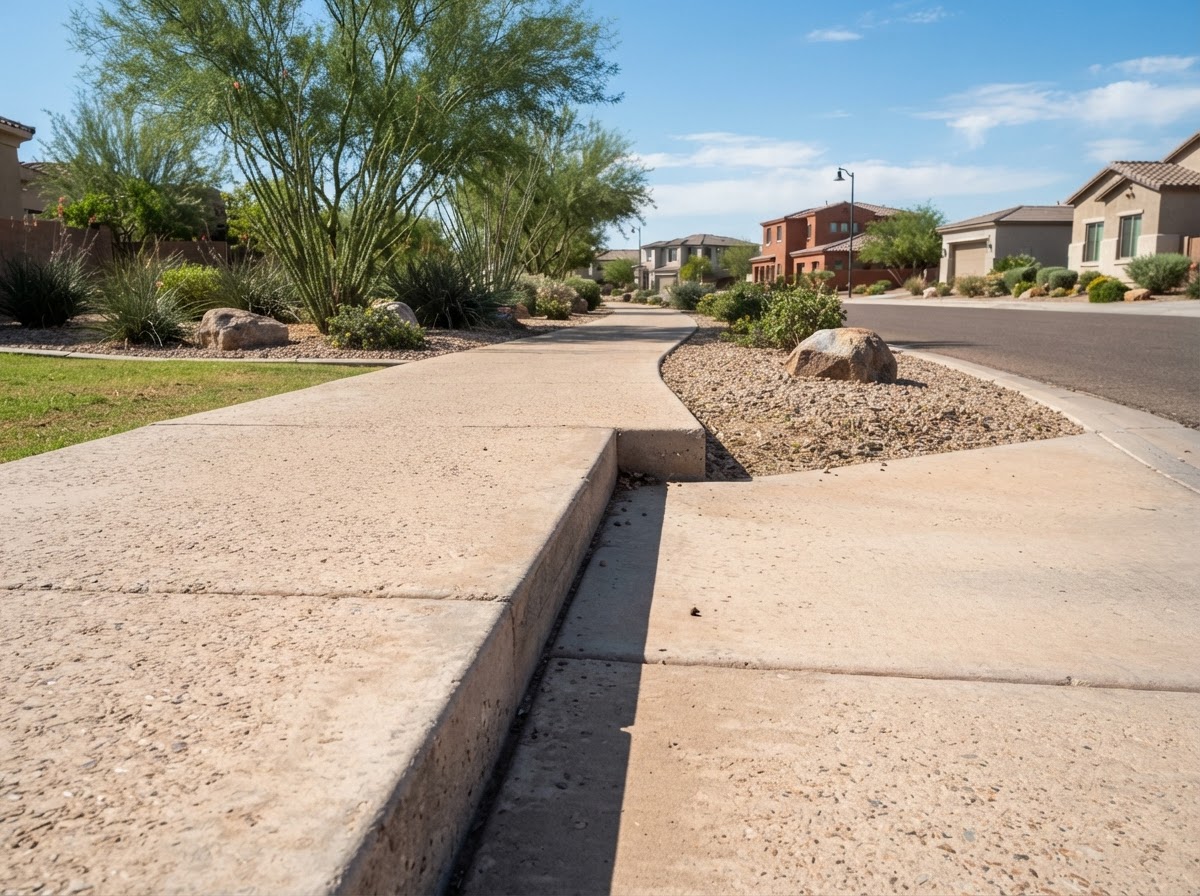
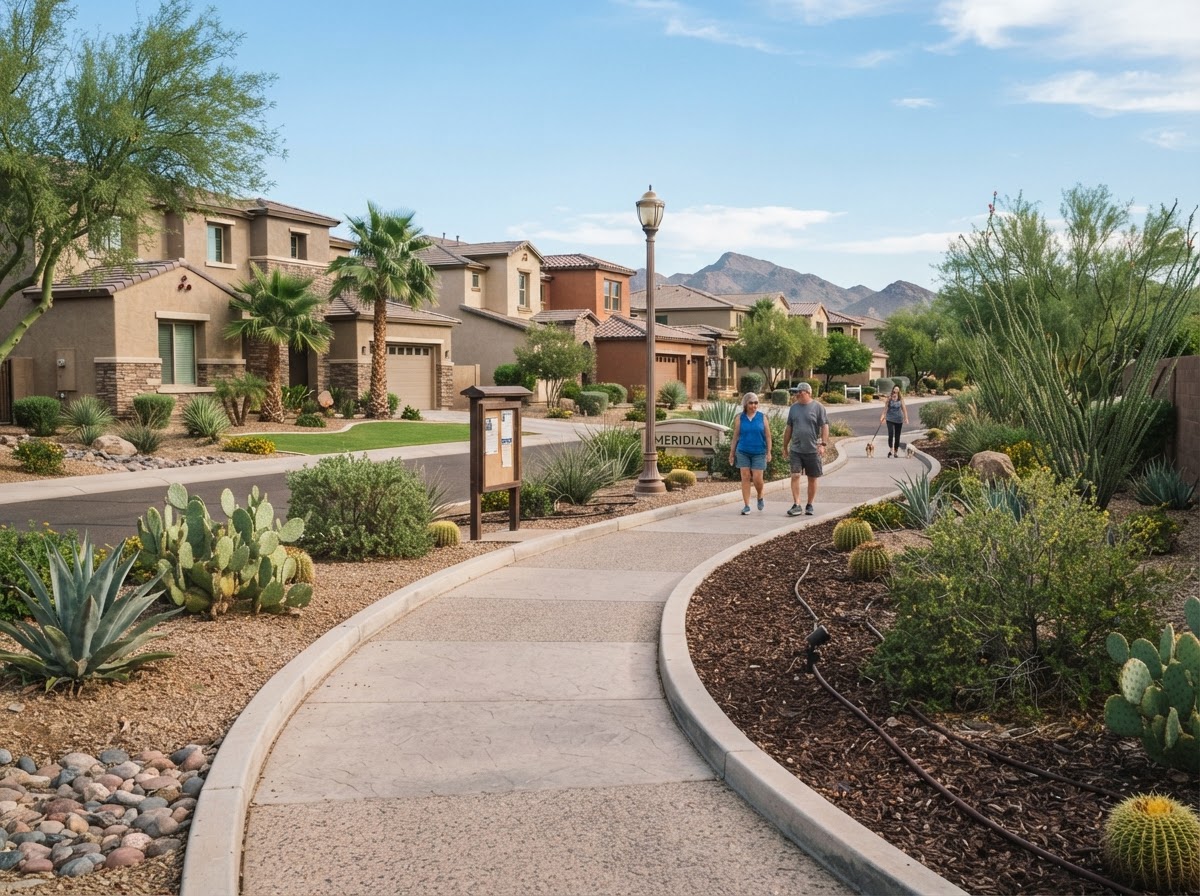
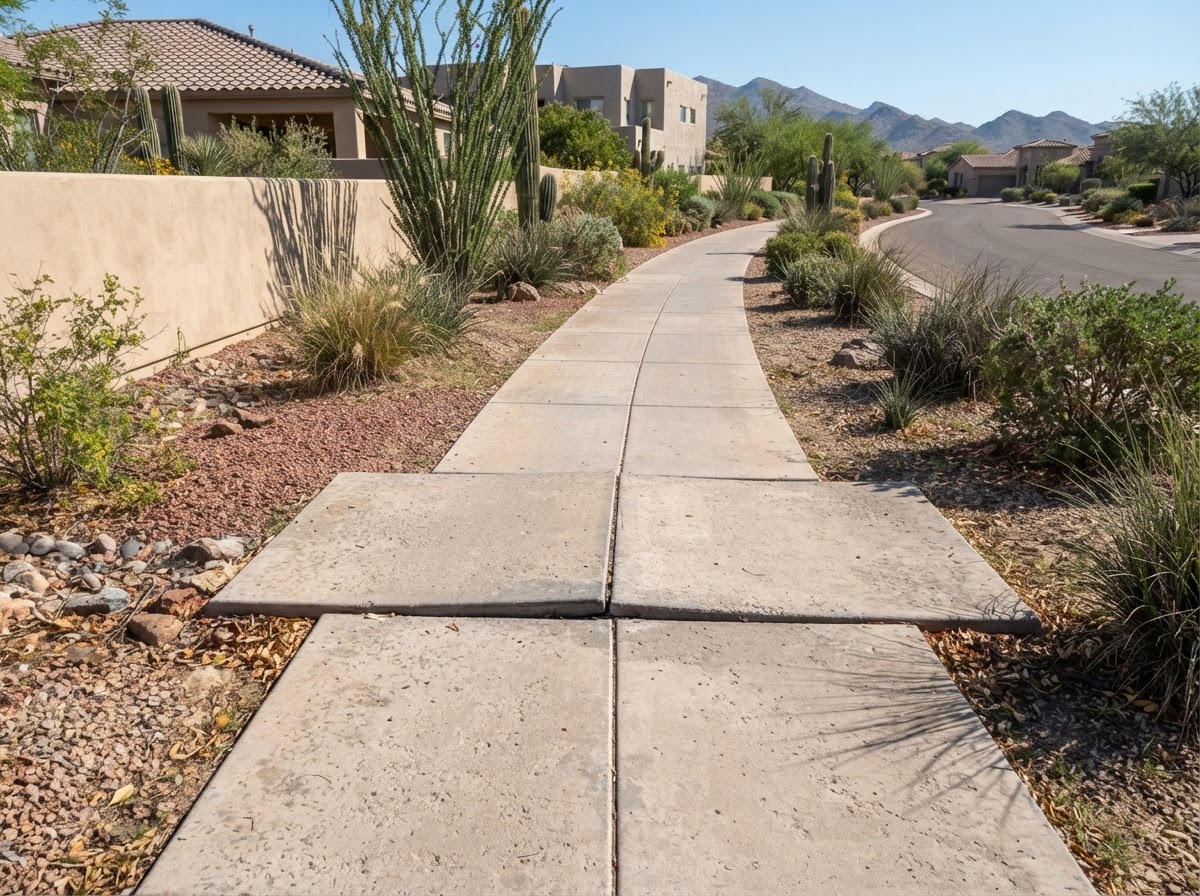
HOA common-area sidewalk in a Queen Creek master-planned community

Sidewalk Leveling

Sidewalk leveling in Queen Creek addresses uneven pedestrian panels in residential walkways, front-entry paths, and HOA common-area sidewalks where one panel has settled below the next. We evaluate the transition height, panel condition, and whether roots, irrigation, or subgrade settlement are contributing factors.

We use polyjacking or mudjacking to lift the settled panel through controlled injection, bringing it closer to the adjacent slab elevation. The compact footprint of foam injection is often useful in landscaped areas and tight side-yard walkways common in Queen Creek's master-planned layouts.

The outcome is a more even pedestrian surface with a reduced vertical transition between panels — improving walkability and addressing the uneven transition without replacing the entire sidewalk run.

Learn more about sidewalk leveling →
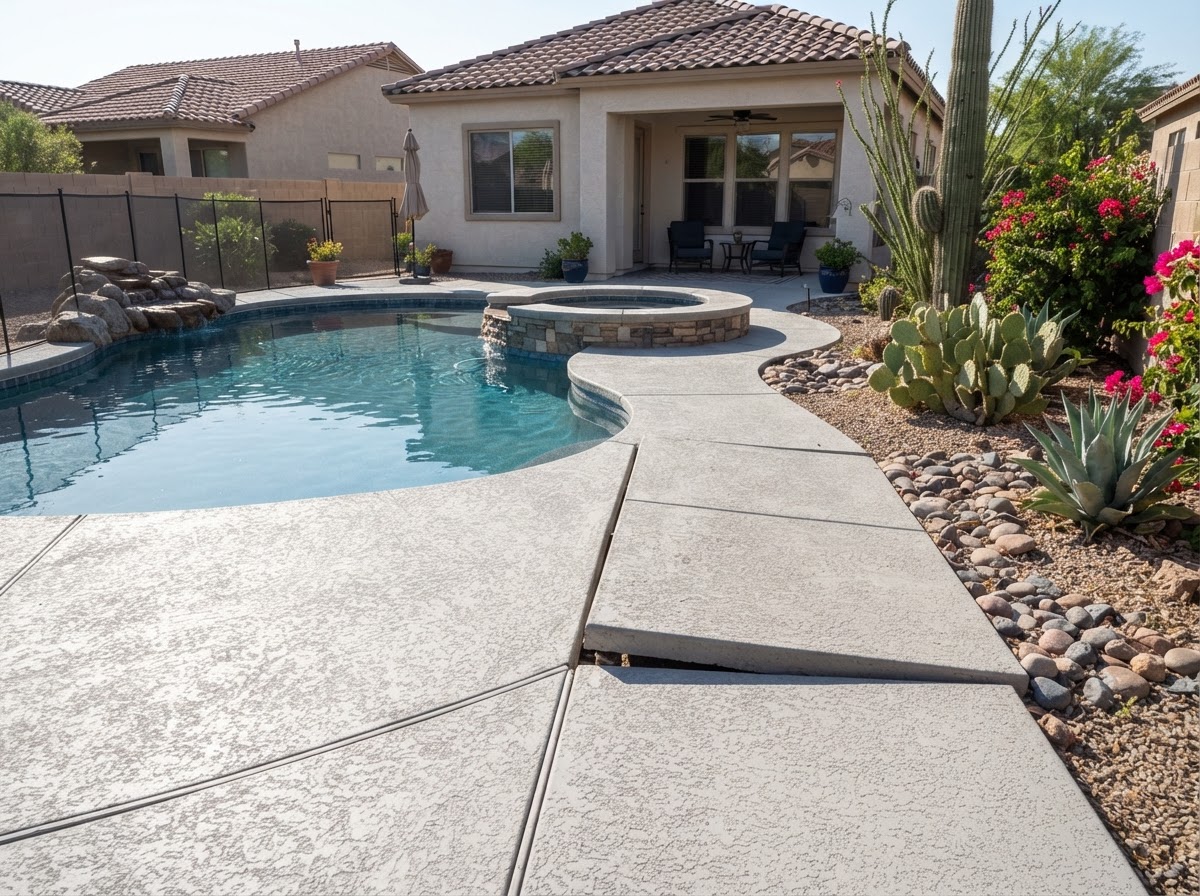
Backyard pool deck and patio at a newer Queen Creek home with a settled section

Pool Deck and Patio Leveling

Pool deck and patio leveling in Queen Creek targets settled concrete sections around backyard pools, patios, and outdoor living areas — common features in the area's newer detached homes. We assess the deck slope, pool-edge transitions, coping relationships, expansion joints, and drainage direction before recommending a correction.

Using polyurethane foam or slurry-based lifting, we introduce material beneath the settled deck section to restore support and controlled elevation. Pool deck work requires attention to drains, isolation joints, and the relationship between the deck and adjoining patio or walkway slabs.

The result is a more even pool deck or patio surface with reduced settlement transitions — improving usability of the outdoor space and addressing low spots where water may collect, while preserving the existing deck concrete.

Learn more about pool deck leveling →
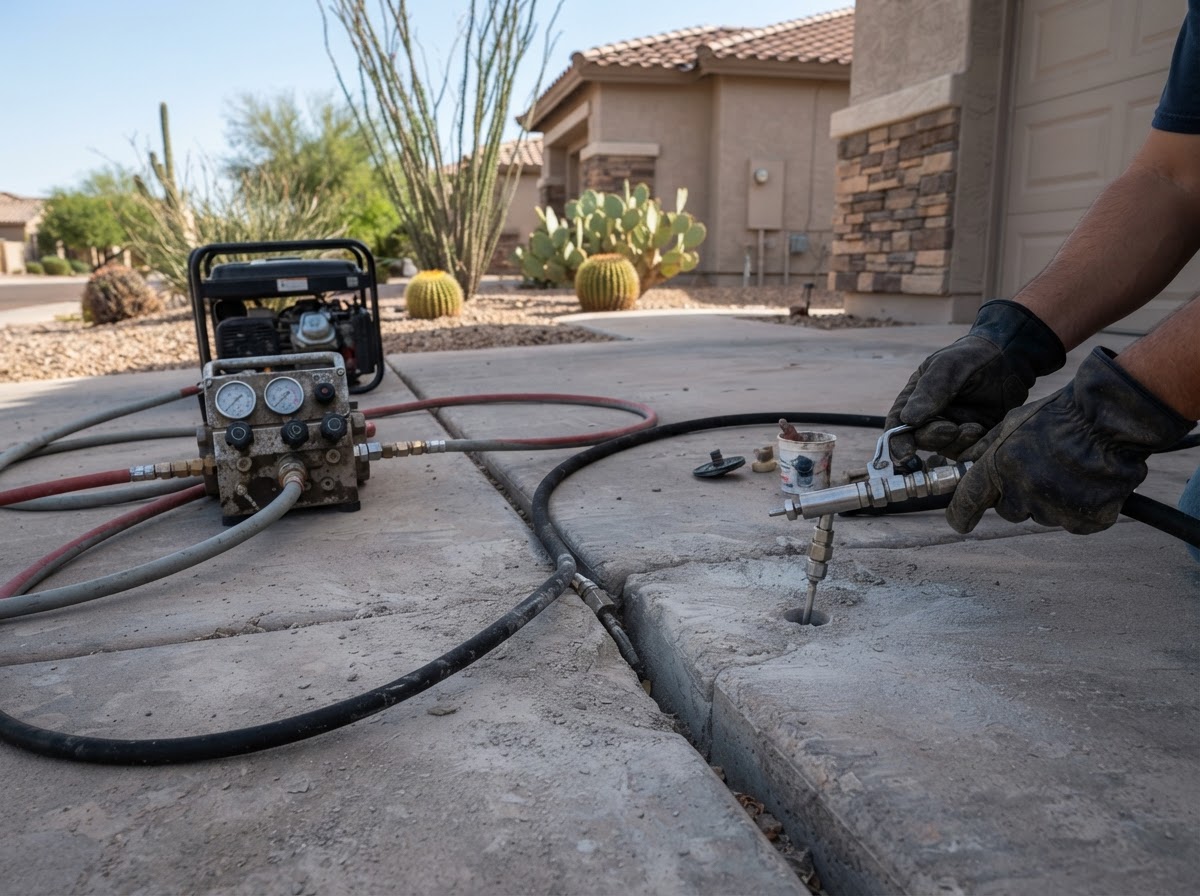
Polyurethane foam concrete leveling equipment beside a settled slab

Polyjacking

Polyjacking in Queen Creek uses expanding polyurethane foam introduced beneath settled concrete through small injection points to fill voids, restore support, and provide controlled lift. It is well-suited to many newer residential flatwork applications where slab condition and access make foam lifting a practical choice.

The polyurethane material expands beneath the slab, filling voids and exerting controlled lifting force at designated lift points. The foam is comparatively lightweight versus traditional mudjacking slurry, and injection openings are generally smaller. Method selection still depends on slab condition, void size, and project economics — foam is not automatically the right answer for every slab.

The outcome is a lifted and supported slab with voids filled beneath it — often with a faster return-to-use window than heavier slurry methods, though timing depends on material and project conditions.

Learn more about polyjacking →
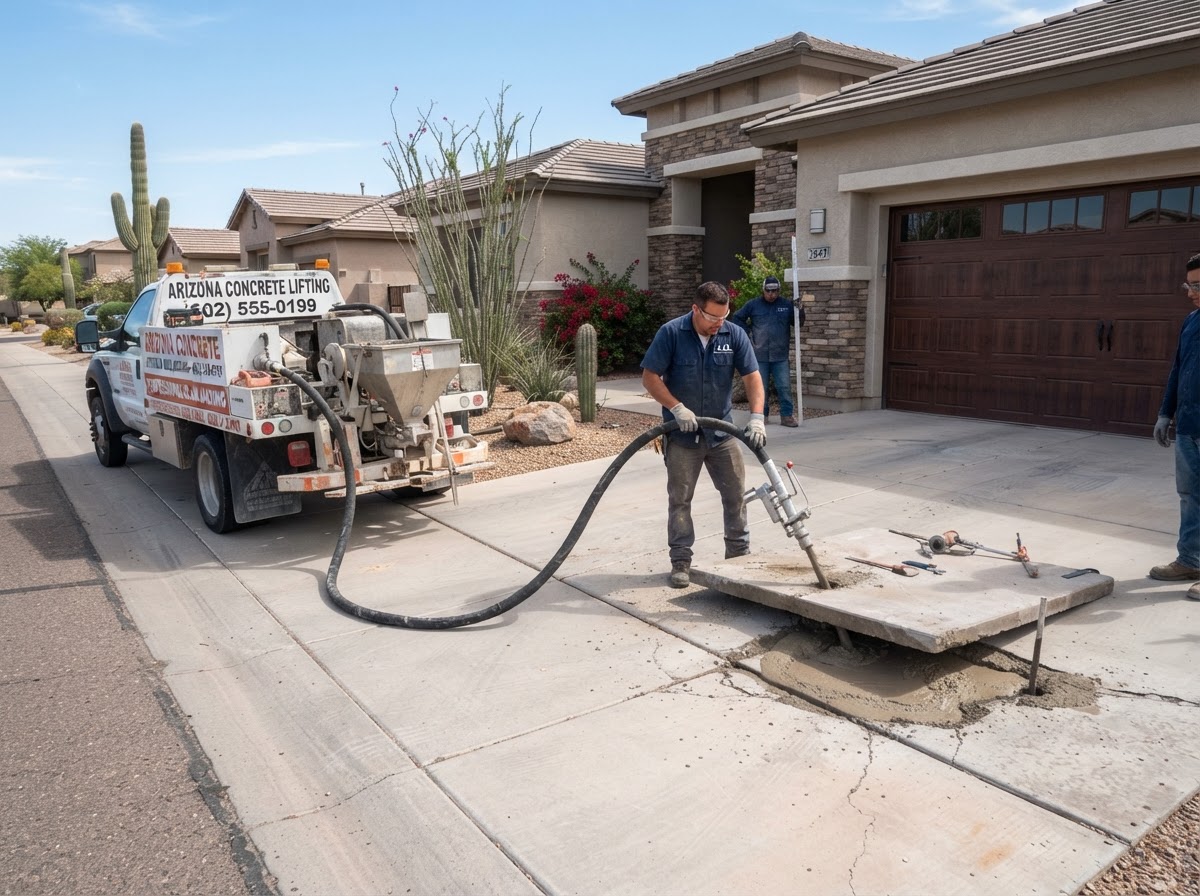
Concrete lifting equipment set up beside a settled residential slab

Mudjacking

Mudjacking in Queen Creek uses a cementitious slurry pumped beneath settled concrete through access holes to raise and support the slab. It remains a useful and established leveling method for suitable projects where slab condition, void size, and access make slurry-based lifting a practical fit.

The slurry fills voids and exerts lifting force through the access holes, bringing the settled panel closer to the intended elevation. Mudjacking generally uses larger access openings and heavier material than polyurethane foam — factors we weigh against slab condition, load, and project economics when recommending a method.

The result is a raised and supported slab with restored subgrade contact — a proven approach for many driveway, sidewalk, and patio applications where the concrete is intact and the project conditions suit slurry-based lifting.

Learn more about mudjacking →
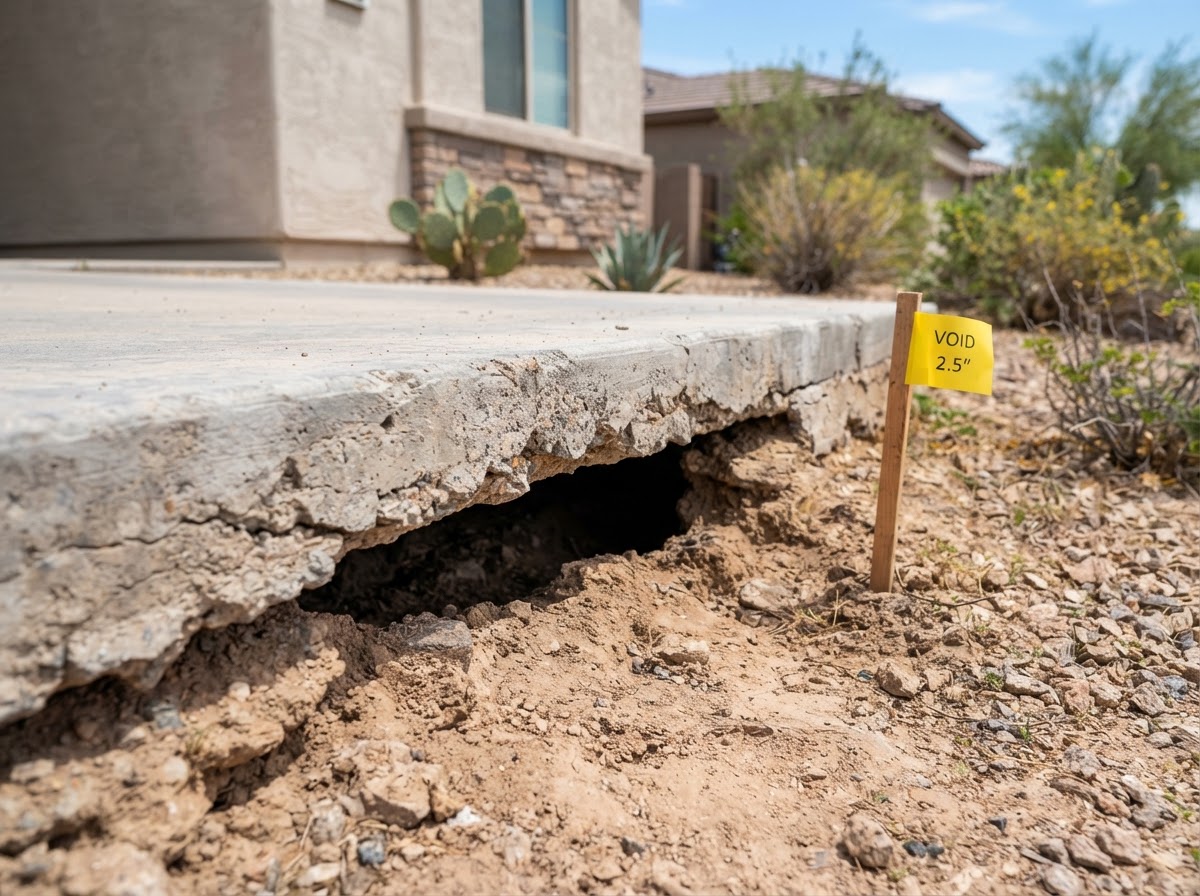
Technician evaluating slab support beneath exterior concrete

Concrete Void Filling and Slab Stabilization

Void filling and slab stabilization in Queen Creek addresses unsupported spaces beneath concrete slabs — gaps that can form when fill material settles, irrigation or drainage washes out subgrade, or compaction varies beneath newer flatwork. The objective may be support restoration without significant elevation change, or a combination of filling and controlled lift.

We evaluate the slab condition, identify likely void areas, and choose a material — polyurethane foam or cementitious grout — based on void size, slab thickness, access, and whether stabilization or elevation correction is the goal. Filling a void and forcing an unnecessary lift are different objectives, and we distinguish between them.

The outcome is a slab with restored support beneath it, reducing the risk of further settlement or cracking from unsupported conditions — without replacing the concrete or forcing a lift that the slab does not need.

Learn more about concrete void filling →
Uneven sidewalk panel transition in a Queen Creek neighborhood

Concrete Trip Hazard Repair

Concrete trip hazard repair in Queen Creek addresses uneven vertical transitions between adjacent slab panels — often where one sidewalk, driveway, or walkway panel has settled below the next. We evaluate which surface moved, whether the panel is a leveling candidate, and whether settlement, roots, or drainage contributed to the transition.

Where the settled panel is intact and suitable for lifting, we use polyjacking or mudjacking to raise it closer to the adjoining surface. Heaved, badly broken, or root-displaced panels may require a different repair approach, and we tell you when leveling is not the right path.

The result is a reduced vertical transition at the slab joint — improving pedestrian safety and walkability without replacing the entire panel run, where slab condition supports leveling.

Learn more about trip hazard repair →
HOA common-area pedestrian sidewalk in a Queen Creek community

HOA and Commercial Concrete Leveling

HOA and commercial concrete leveling in Queen Creek addresses settled flatwork across common areas, community sidewalks, multifamily walkways, and commercial pedestrian surfaces in the area's expanding corridors. We evaluate multiple affected areas, separate leveling candidates from replacement candidates, and prioritize scope.

Using polyjacking, mudjacking, or void filling, we address settled panels across the property with attention to pedestrian transitions, access planning, and phased work where practical. We do not imply existing HOA contracts or guarantee zero downtime during work.

The outcome is a prioritized, scope-clear approach to multi-area concrete leveling — helping property managers and HOA boards address pedestrian safety and settlement issues without wholesale replacement of usable concrete.

Learn more about HOA and commercial leveling →

Common Concrete Settlement Problems in Queen Creek Properties

Queen Creek's development pattern — newer homes on placed fill with desert landscaping and irrigation — creates a recognizable set of concrete conditions. These are the problems we are most often asked to evaluate, not a diagnosis of every property.

Settlement in Newer Residential Flatwork

Queen Creek's newer subdivisions often sit on placed fill and subgrade material that can settle over time. Driveway panels, sidewalks, and patio slabs may lose support and drop even within the first several years of construction — newer concrete does not guarantee stable subgrade.

Irrigation and Drainage Around Hardscape

Desert landscaping combined with irrigation systems can direct water beneath or alongside concrete flatwork. Over time, water movement can erode subgrade material or create voids beneath driveway edges, sidewalks, and pool deck sections.

Driveway and Sidewalk Transition Movement

Settlement commonly appears at transitions — where the driveway meets the garage slab, where a sidewalk crosses the driveway, or where adjoining panels meet at a control joint. These transition points are often the first places unevenness becomes noticeable.

Voids or Lost Support Beneath Exterior Slabs

Gaps can form beneath concrete when fill settles, subgrade compaction varies, or water washes out supporting material. A slab may look intact on the surface while losing the support beneath it, leading to eventual settlement or cracking.

Pool Deck and Patio Settlement Around Landscaped Yards

Backyard pool decks and patios in Queen Creek's newer homes can settle where backfill around the pool shell or foundation consolidates, or where irrigation and drainage affect the subgrade. Deck sections may drop at transitions to coping, drains, or adjoining patio slabs.

Queen Creek Areas We Serve

We provide concrete leveling services across Queen Creek's residential and commercial areas. Common communities and corridors we are asked about include:

Queen Creek Station

Concrete leveling service is available in this Queen Creek area. Contact us to confirm coverage for your specific project location.

Hastings Farms

Concrete leveling service is available in this Queen Creek area. Contact us to confirm coverage for your specific project location.

Meridian

Concrete leveling service is available in this Queen Creek area. Contact us to confirm coverage for your specific project location.

Ironwood Crossing

Concrete leveling service is available in this Queen Creek area. Contact us to confirm coverage for your specific project location.

Encanterra area

Concrete leveling service is available in this Queen Creek area. Contact us to confirm coverage for your specific project location.

Queen Creek Marketplace / Town Center corridor

Concrete leveling service is available in this Queen Creek area. Contact us to confirm coverage for your specific project location.

Permits and Property Responsibility for Concrete Work in Queen Creek

Concrete leveling work on entirely private flatwork — your driveway, patio, or private walkway — is generally different from work in the public right-of-way. However, sidewalk and right-of-way responsibility can vary by location in Queen Creek, and some sidewalk panels may fall under municipal or HOA responsibility rather than private ownership. The exact property line and jurisdiction should be confirmed before any public-facing concrete work proceeds.

We do not invent specific permit requirements or code numbers. If your project involves public right-of-way concrete, we recommend confirming authorization with the appropriate jurisdiction before work begins. For private-property leveling, the process is typically straightforward and begins with an on-site evaluation.

How Queen Creek Concrete Leveling Projects Work

A clear, condition-first process keeps your Queen Creek project straightforward from evaluation to final walkthrough.

  1. 1

    Request an Evaluation

    Call 602-905-1220 or submit the form on this page with your Queen Creek project address and a description of the settled concrete. We will schedule an on-site evaluation.

  2. 2

    Inspect Slab Condition and Surrounding Grade

    We examine the settled concrete, adjoining panel elevations, control and expansion joints, drainage direction, and any visible signs of voids or lost support — with attention to Queen Creek's newer-development subgrade and irrigation context.

  3. 3

    Identify Settlement and Support Concerns

    We determine which panels have settled, whether voids exist beneath the slab, and whether the cause appears related to fill settlement, drainage, irrigation, or compaction — without diagnosing every property as having the same problem.

  4. 4

    Choose an Appropriate Leveling or Stabilization Method

    Based on slab condition, lift amount, void size, and access, we recommend polyjacking, mudjacking, void filling, or stabilization — or replacement if the concrete is too deteriorated to lift responsibly.

  5. 5

    Perform Controlled Lifting or Stabilization

    We execute the selected method with controlled material placement, monitoring slab elevation and transitions throughout the process. No hazardous DIY procedures are involved.

  6. 6

    Review Elevation, Transitions, and Cleanup

    We review the finished elevations, check transitions at garage and sidewalk, address cleanup, and discuss any remaining priorities or next steps for your Queen Creek property.

What Does Concrete Leveling Cost in Queen Creek?

Concrete leveling pricing is project-specific. Every Queen Creek quote is based on an on-site evaluation of the actual slabs, settlement, and access conditions. The table below shows the scope categories we price and the variables that move the cost — not fabricated dollar figures.

Job typeTypical rangeWhat affects price
Driveway slab levelingProject-specific estimateDriven by panel count, square footage, amount of lift, void volume, method selected, access through gates or side yards, and slab thickness or condition.
Sidewalk / walkway levelingProject-specific estimateAffected by number of panels, transition height, root or landscaping constraints, access, method, and whether the walkway is private or in a common area.
Patio / pool-deck levelingProject-specific estimateVaries with deck section count, pool-edge access, void size, material volume, drains and joints, landscaping constraints, and whether stabilization or lift is needed.
Polyjacking / mudjackingProject-specific estimateMethod choice affects material cost, injection-point count, setup, and mobilization. Foam and slurry have different material and access characteristics that influence price.
Void filling / stabilizationProject-specific estimateDriven by void size and depth, material volume, number of treatment locations, slab condition, drainage context, and whether lift is also required or stabilization alone.

Ready to Level Your Queen Creek Concrete?

Get a clear estimate and honest repair-vs-replacement guidance from a concrete leveling specialist serving Queen Creek.

Call 602-905-1220Or fill out the form →

Request an Estimate

Tell us about your project. We'll follow up with clear pricing and next steps.

The customer/project address for the work.


Consent is optional. You may request an estimate without opting in to text messages.

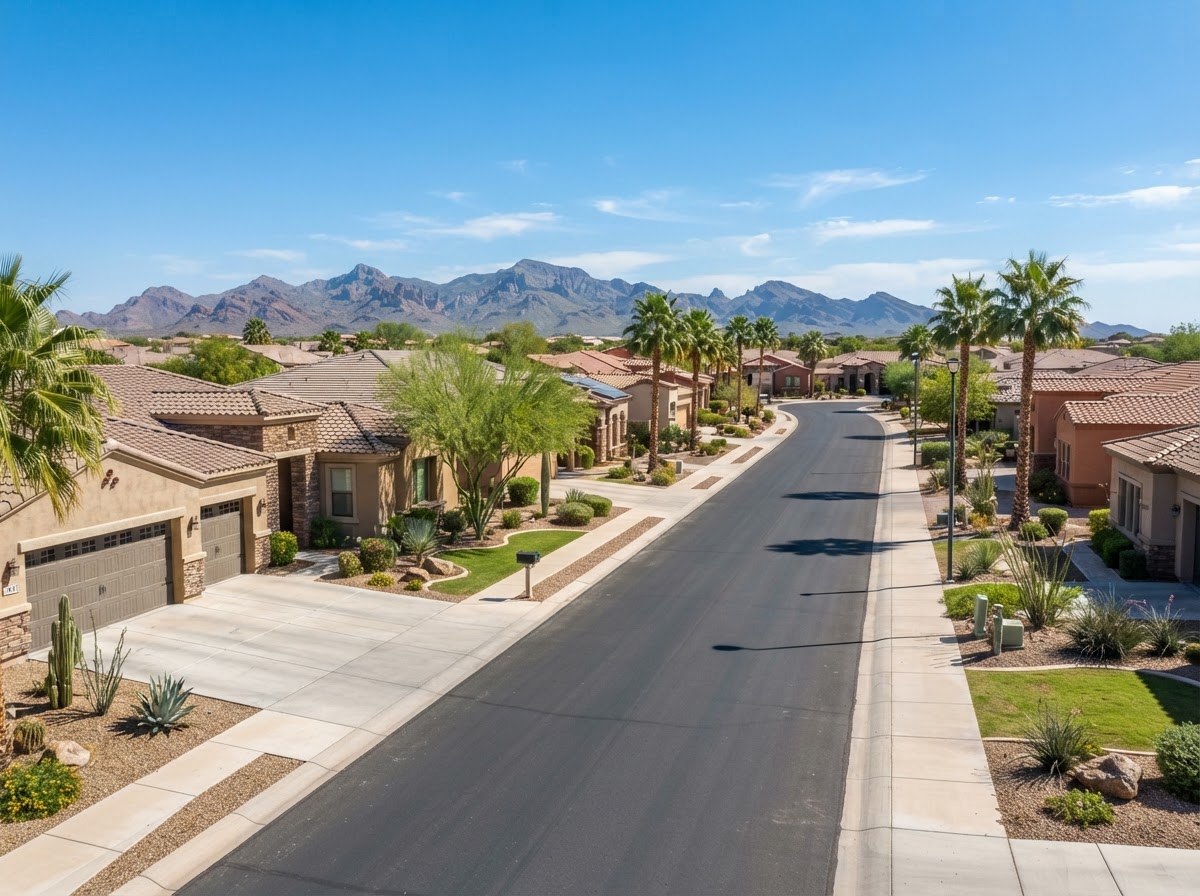
Queen Creek residential streetscape with concrete driveways and sidewalks in a master-planned neighborhood

Serving Queen Creek's Growing Concrete Needs

Queen Creek's master-planned communities have transformed former desert and agricultural land into miles of residential concrete flatwork. That growth means a steady need for concrete leveling — not because the construction is poor, but because placed fill, irrigation, and desert moisture conditions can affect any slab over time.

Whether your property is in Queen Creek Station, Ironwood Crossing, the Encanterra area, or along the Ellsworth or Power Road corridors, the first step is the same: an on-site evaluation of your settled concrete and a clear recommendation based on what we actually find.

Can newer concrete in Queen Creek still settle?

Yes, newer concrete in Queen Creek can settle when the fill material, subgrade compaction, irrigation, or drainage conditions beneath it change. Even recently poured flatwork in master-planned communities sits on placed fill that can consolidate over time, and desert moisture swings can affect support. Newer construction does not guarantee a stable subgrade, which is why an on-site evaluation matters.

Can a sunken Queen Creek driveway be leveled?

A sunken Queen Creek driveway can often be leveled when the concrete panels remain intact and suitable for lifting. We assess the panel condition, the garage and sidewalk transitions, and whether voids exist beneath the slab before recommending polyjacking or mudjacking. If the concrete is severely cracked or fragmented, replacement may be more appropriate.

Can sidewalks in Queen Creek be lifted?

Sidewalk panels in Queen Creek can often be lifted when the concrete is intact and the settlement is limited to elevation loss. We use polyjacking or mudjacking to raise the settled panel closer to the adjoining surface. However, right-of-way sidewalks may involve municipal or HOA responsibility, so property jurisdiction should be confirmed first.

Can pool decks and patios be leveled in Queen Creek?

Pool decks and patios in Queen Creek can often be leveled when the concrete remains sound and the settlement can be corrected without creating conflicts at coping, drains, or adjoining slabs. We evaluate the deck slope, pool-edge transitions, and joint relationships before recommending a method. Severely deteriorated deck concrete may require replacement instead.

Is polyjacking available in Queen Creek?

Yes, polyjacking is available for Queen Creek properties where slab condition, void size, and access make polyurethane foam leveling a practical fit. We also offer mudjacking and void filling, and we recommend the method based on your specific project — not a one-size-fits-all preference for foam.

What causes voids beneath concrete in Queen Creek?

Voids beneath Queen Creek concrete can form when placed fill settles, irrigation or drainage washes out subgrade material, or compaction varies beneath exterior flatwork. Water movement along slab edges and through landscaped areas is a common contributor. An on-site evaluation is the only way to confirm whether a void exists and what caused it.

When is replacement better than leveling?

Replacement is more appropriate than leveling when the concrete itself is severely cracked, fragmented, deteriorated, or structurally unsuitable for lifting. Leveling works best when the slab is intact but has lost elevation or support. We tell you honestly which path makes sense after evaluating your slab.

How do I request a concrete leveling estimate in Queen Creek?

Call 602-905-1220 or fill out the form on this page with your Queen Creek project address and a description of the settled concrete. We will schedule an on-site evaluation and provide a clear, project-specific estimate with honest repair-vs-replacement guidance.

Request a Concrete Leveling Estimate

Talk to a Gilbert concrete leveling specialist with 10+ years of experience. Insured work, clear pricing, and a straightforward process — no pressure.

602-905-1220

Request an Estimate

Tell us about your project. We'll follow up with clear pricing and next steps.

The customer/project address for the work.


Consent is optional. You may request an estimate without opting in to text messages.