10+ Years Experience · Insured
Concrete Trip Hazard Repair in Mesa, AZ
Evaluate and correct uneven concrete transitions across Mesa's residential, HOA, and commercial walkways — leveling settled panels where the slab condition supports it.
Mesa's mix of aging and newer pedestrian flatwork creates a varied landscape of uneven concrete transitions. In established neighborhoods like Dobson Ranch, decades of settlement, root influence, and joint wear can produce vertical offsets between sidewalk panels. In newer areas like Eastmark, fill settlement and drainage changes can create similar trip transitions in younger concrete. HOA common areas, apartment walkways, and commercial pedestrian surfaces add another layer of flatwork where uneven transitions can develop. Concrete trip hazard repair addresses those offsets — and leveling is one correction option when the settled panel is intact and suitable for lifting.
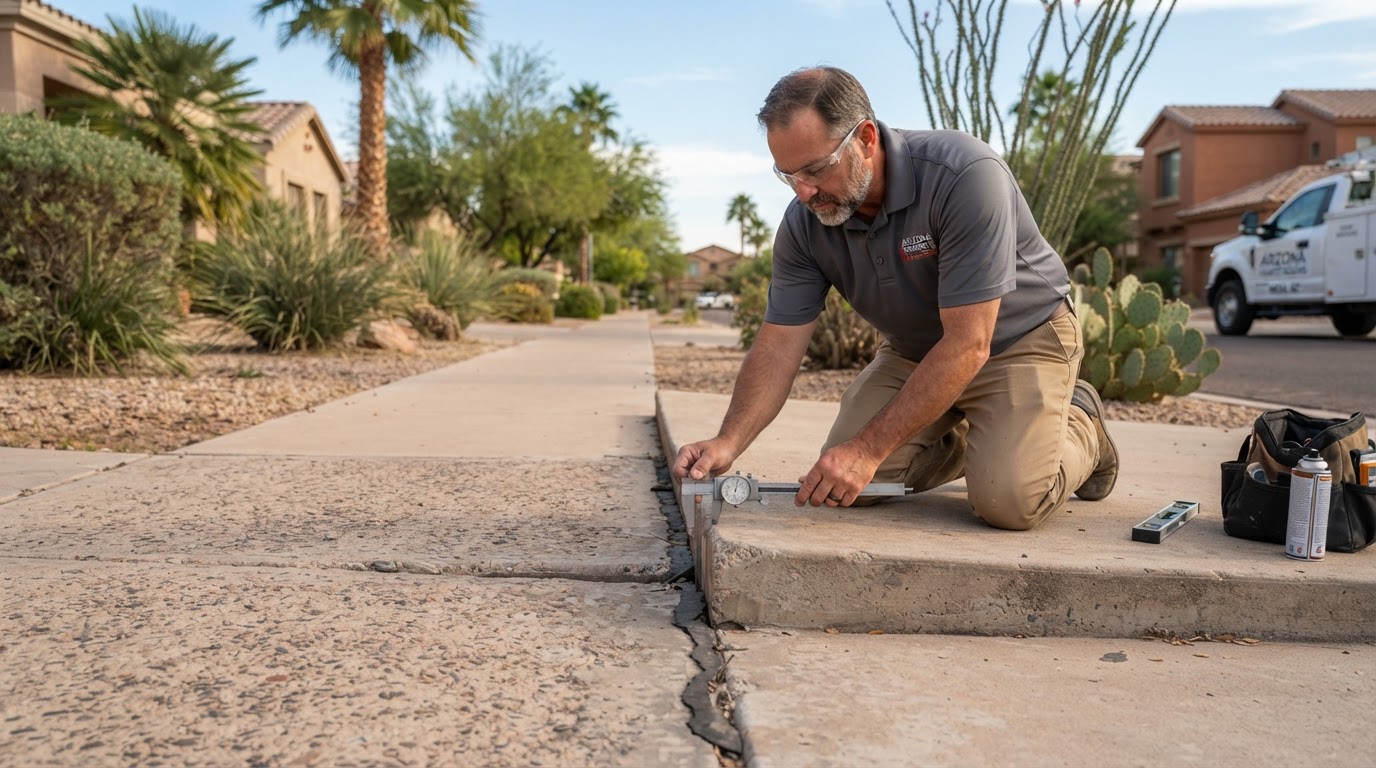
With 10+ years of experience and insured service, Gilbert Concrete Leveling evaluates each Mesa trip hazard on its actual cause and slab condition. A settled-low panel may be a leveling candidate, while a heaved, root-displaced, or badly deteriorated panel may require a different repair approach. We do not imply every trip hazard can be lifted, and we do not guarantee ADA or code compliance — applicable measurements and standards must be evaluated for the specific site. We determine which surface moved, why it matters, and whether leveling is the right path before recommending a correction.
Concrete Trip Hazard Repair for Mesa Properties
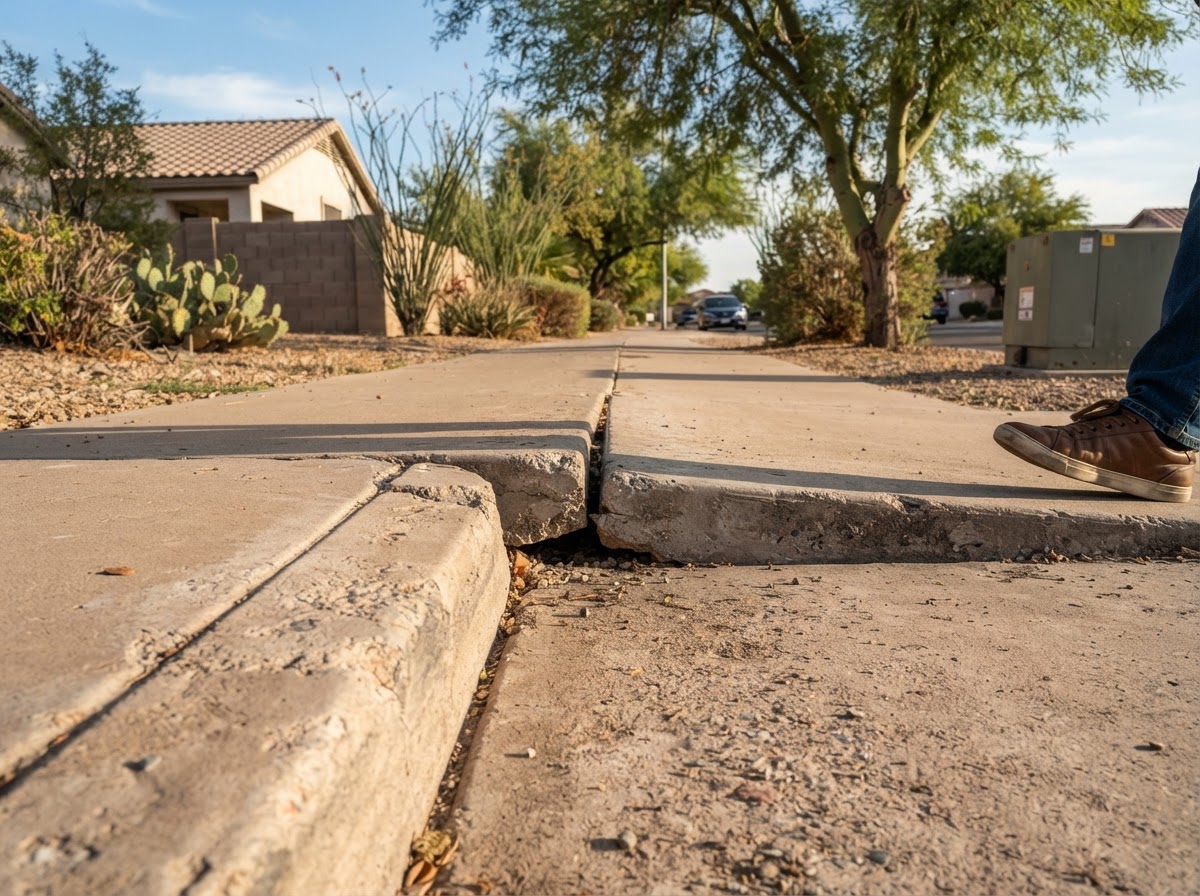
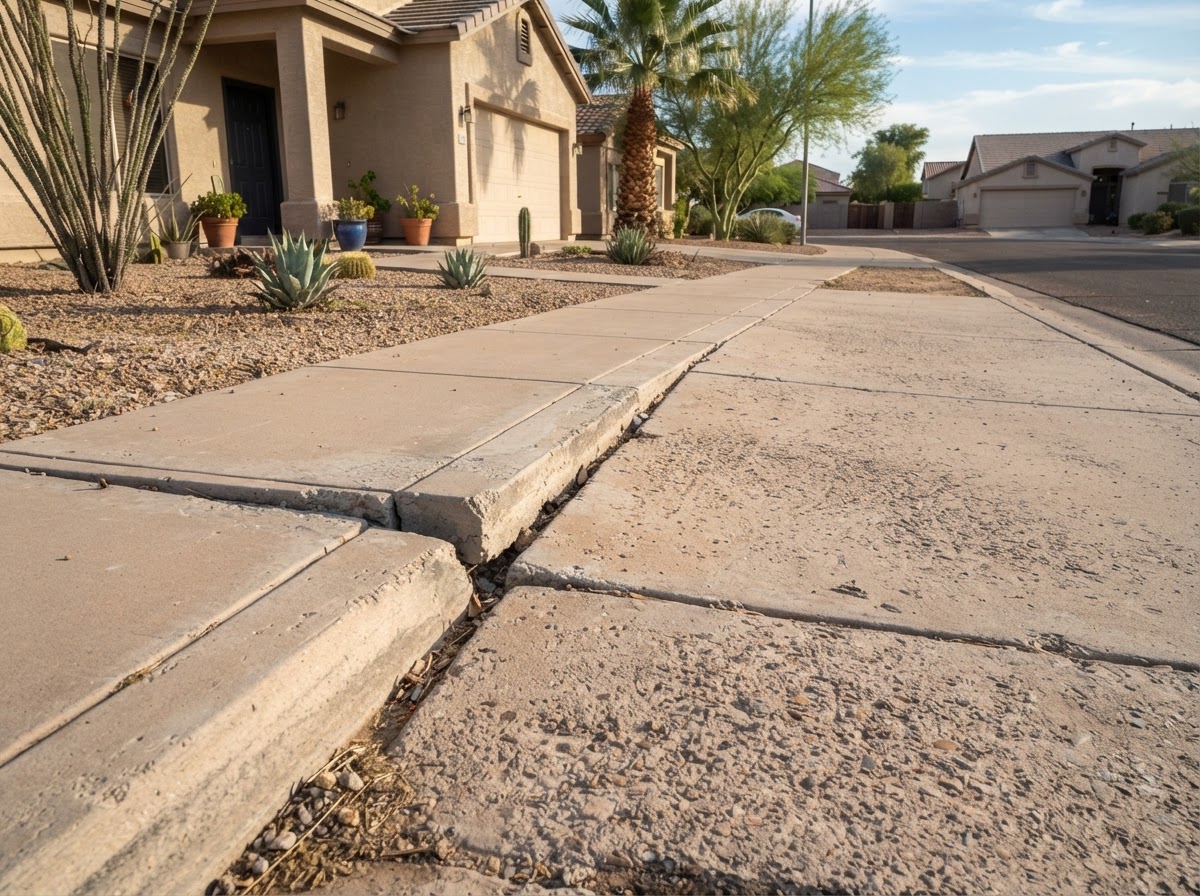
Concrete trip hazard repair in Mesa focuses on the vertical transitions between adjoining slab panels — where one sidewalk, driveway, or walkway panel has settled or heaved relative to the next. We evaluate which surface moved, whether the panel is a leveling candidate, and whether settlement, roots, drainage, or heaving contributed to the transition. Where the settled panel is intact and suitable for lifting, we use polyjacking or mudjacking to raise it closer to the adjoining surface. Heaved, badly broken, or root-displaced panels may require a different repair approach, and we tell you when leveling is not the right path. We also confirm whether the concrete falls under private, HOA, or public right-of-way responsibility before assuming work can proceed.
Common Uneven-Concrete Problems in Mesa
Mesa's mix of aging and newer pedestrian flatwork creates a varied set of trip-hazard conditions. These are the issues we are most often asked to evaluate, not a diagnosis of every property.
Settled Sidewalk Panels
A sidewalk panel that has settled below its neighbor creates a vertical offset at the joint — the most common trip transition across Mesa's residential and common-area walkways.
Root-Affected Walkways in Established Areas
Mature trees in established Mesa neighborhoods can heave or displace sidewalk panels, creating raised transitions that may require a different repair than a simple settled panel.
Driveway and Entry Transitions
Where a driveway meets a walkway or an entry path meets a slab, settlement can change the elevation relationship and create an uneven transition at a high-traffic point.
HOA and Multifamily Common-Area Slabs
Mesa's HOA common areas and apartment communities have extensive pedestrian flatwork where multiple panels may develop uneven transitions across a property.
Commercial Pedestrian Flatwork
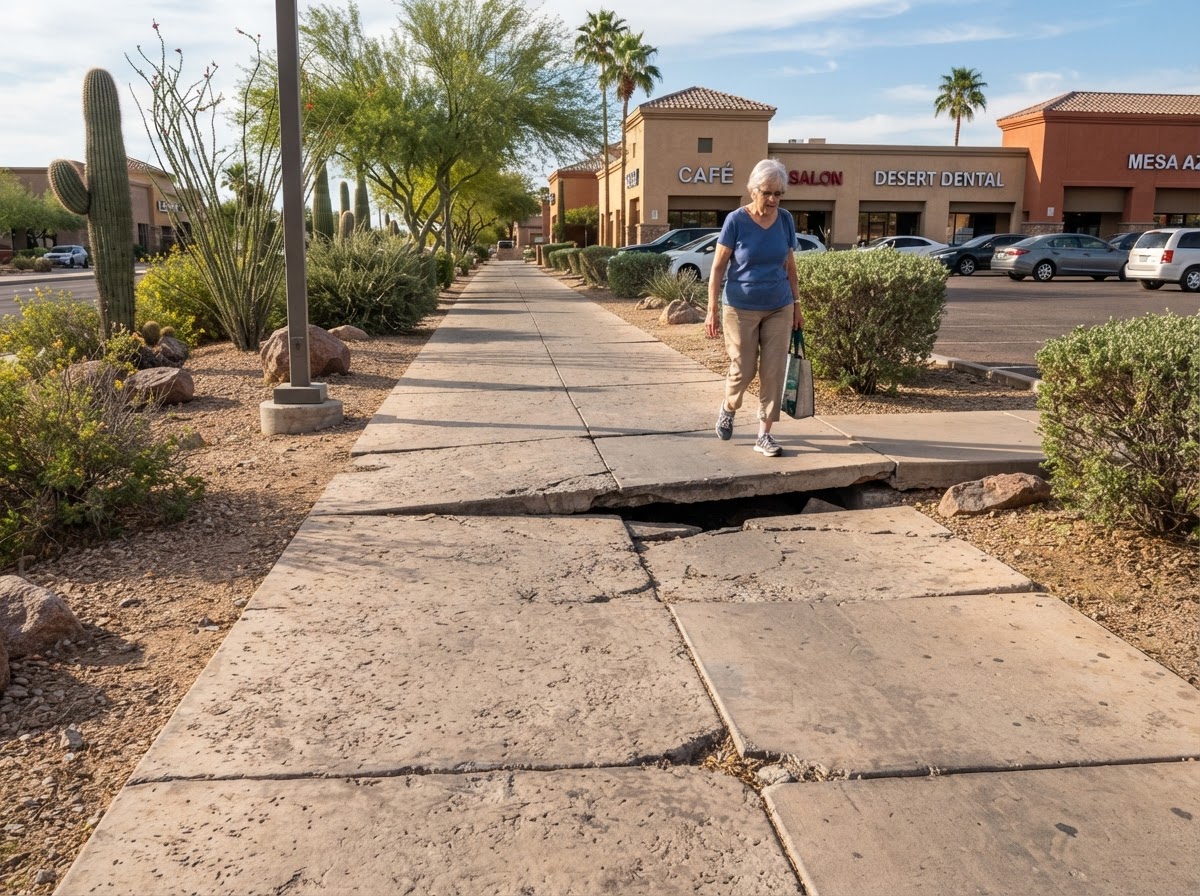
Retail and office pedestrian surfaces in Mesa can develop trip transitions at panel joints, requiring evaluation of whether leveling or replacement is the right correction.
How Much Does Concrete Trip Hazard Repair Cost in Mesa?
Trip hazard repair pricing is project-specific. Every Mesa quote is based on an on-site evaluation of the actual transitions, movement, and access. The table below shows the scope categories we price and the variables that move the cost — not fabricated dollar figures.
| Job type | Typical range | What affects price |
|---|---|---|
| Single uneven panel | Project-specific estimate | Driven by panel size, type of movement, transition height, method, access, and slab condition. |
| Multiple sidewalk panels | Project-specific estimate | Affected by panel count, transition heights, method, access, and root or landscape constraints. |
| Entry / walkway transition | Project-specific estimate | Varies with the elevation difference, void presence, method, and adjoining surface relationships. |
| HOA / common-area evaluation and leveling | Project-specific estimate | Driven by number of affected panels, community coordination, phasing, method, and replacement portions. |
| Commercial pedestrian flatwork | Project-specific estimate | Affected by panel count, site-use coordination, access, method, and whether panels need replacement instead. |
Ready to Evaluate Your Mesa Trip Hazard?
Get a clear estimate and honest repair-vs-replacement guidance from a concrete leveling specialist serving Mesa.
How Soon Can We Evaluate a Mesa Trip Hazard?
Scheduling and service availability depend on your specific project location within the Mesa area and our current routing. We do not publish an exact drive time. We provide broad service coverage across the US-60 and Loop 202 corridors, along Southern Avenue, Baseline Road, Power Road, and Country Club Drive. The best way to confirm timing is to call 602-905-1220 or submit the form on this page with your project address.
602-905-1220Our Mesa Uneven-Concrete Evaluation Process
A condition-first process keeps your Mesa trip hazard evaluation straightforward from inspection to final walkthrough.
- 1
Inspect the Uneven Concrete
We examine the vertical transition between adjoining panels, measure the offset, and assess the surrounding flatwork, drainage, and landscape context across the Mesa property.
- 2
Determine Which Surface Moved
We identify whether the lower panel settled, the higher panel heaved, or both — and whether roots, drainage, erosion, or compaction contributed to the movement.
- 3
Distinguish Settlement vs Heaving or Deterioration
We determine whether the panel is a leveling candidate or whether heaving, root displacement, or severe deterioration means a different repair approach is needed.
- 4
Select Leveling or an Alternative Path
Based on the movement type and slab condition, we recommend polyjacking, mudjacking, void filling — or replacement and an alternative repair when leveling is not appropriate.
- 5
Review the Result and Next Steps
We review the finished transition, check adjoining surfaces, address cleanup, and discuss any remaining priorities or next steps for your Mesa property.
Why Mesa Property Owners Choose Our Trip Hazard Repair Approach
Mesa's mix of aging and newer pedestrian flatwork requires careful evaluation rather than a one-size-fits-all lift. We bring condition-first assessment and multiple correction options to every project.
10+ Years of Experience
More than a decade of concrete leveling work across Valley residential, HOA, and commercial flatwork, including the varied pedestrian surfaces that define Mesa.
Insured Service
We carry insurance for residential and commercial concrete leveling projects, giving Mesa property owners a measure of protection.
Settlement vs Heaving Distinction
We determine whether a trip hazard comes from a settled panel that can be lifted or a heaved, root-displaced panel that needs a different repair — rather than assuming every hazard should be lifted.
Multiple Leveling Methods
Polyjacking and mudjacking are both available where leveling is appropriate. We recommend the method that fits the panel and access.
Right-of-Way Awareness
We confirm whether Mesa concrete falls under private, HOA, or public responsibility before assuming work can proceed, rather than treating every panel the same.
Repair-vs-Replacement Guidance
When a panel is intact but settled, leveling often makes sense. When concrete is heaved or badly broken, we tell you — rather than pushing a lift that will not hold up.
Other Concrete Leveling Services in Mesa
Can a settled Mesa sidewalk panel be lifted to reduce an uneven transition?
Yes, a settled Mesa sidewalk panel can often be lifted to reduce an uneven transition when the concrete remains intact and suitable for lifting. We use polyjacking or mudjacking to raise the settled panel closer to the adjoining surface. If the panel is severely cracked or deteriorated, replacement may be more appropriate.
Can leveling fix a root-heaved sidewalk?
No, leveling typically cannot fix a root-heaved sidewalk. A heaved or root-displaced panel has moved upward, and lifting the adjoining panel is rarely the right correction. Root-affected walkways may require a different repair approach, and we tell you when leveling is not the right path.
Can HOA and apartment trip hazards be evaluated?
Yes, HOA common-area sidewalks, apartment walkways, and multifamily pedestrian flatwork in Mesa can be evaluated for trip hazards. We assess multiple affected panels, separate leveling candidates from replacement candidates, and can plan phased work where practical.
Does concrete leveling automatically establish ADA compliance?
No, concrete leveling does not automatically establish ADA compliance. Applicable measurements and standards must be evaluated for the specific site to determine compliance. Leveling can reduce a vertical transition, but compliance depends on the project, location, and governing standards.
When does an uneven panel need replacement instead of leveling?
An uneven panel needs replacement instead of leveling when the concrete is severely cracked, fragmented, deteriorated, heaved, or structurally unsuitable for lifting. Leveling works best when the slab is intact but has lost elevation. We tell you honestly which path makes sense after evaluating the panel.
How do I request a concrete trip hazard estimate in Mesa?
Call 602-905-1220 or fill out the form on this page with your Mesa project address and a description of the uneven concrete. We will schedule an on-site evaluation and provide a clear, project-specific estimate with honest repair-vs-replacement guidance.
Request a Concrete Leveling Estimate
Talk to a Gilbert concrete leveling specialist with 10+ years of experience. Insured work, clear pricing, and a straightforward process — no pressure.
602-905-1220